Radio Salone

Travel Through Music

Post Top Ad

Mostrando entradas con la etiqueta one day. Mostrar todas las entradas
febrero 19, 2026

Fatoumata Diawara - Maliba - 2022


Canciones inspiradas en los manuscritos de Tombuctú

La ciudad de Tombuctú, en el norte de Malí, alberga una enorme colección de manuscritos, algunos de hace más de 600 años. Durante la rebelión armada del país de 2012, miembros del grupo islamista militante Ansar Dine se apoderaron de Tombuctú y comenzaron a destruir los artefactos con el argumento de que eran idólatras. Los residentes sacaron de contrabando muchos de los tesoros de la ciudad para que pudieran ocultarse y distribuirse en manos privadas. Ansar Dine fue expulsado en 2013, y desde entonces se han llevado a cabo proyectos para reconstruir las colecciones. El álbum digital Maliba de Fatoumata Diawara forma la banda sonora de una presentación en línea de los manuscritos en Google Arts and Culture que cuenta la historia de su preservación.

La cantautora maliense comenzó su carrera en solitario en 2011 con la inconteniblemente alegre Fatou, y ha combinado la música con la actuación: en la película Tombuctú de Abderrahmane Sissako de 2014, ambientada durante la ocupación de 2012, encarna el espíritu de la ciudad.

Sus canciones brotan de los manuscritos y celebran la ciudad, la educación, el papel de la mujer y la unidad nacional y mundial. “Un día”, canta en inglés antes de cambiar a Bambara, “Nos daremos cuenta/que los manuscritos en nuestro poder/tienen un gran significado”. Kamele ngoni se pica alrededor del borde de la grieta melancólica en su voz; string glissandi swoop y se deslizan discretamente en el fondo. En la canción que da título al título, con un ritmo oscilante de palmas y una guitarra wah-wah, suplica: “Ayudemos a Malí a convertirse en un país desarrollado”. El rapero Master Soumy (familiar para el público occidental por la película Mali Blues) interviene: “Le debo mi humanidad y mi honor a Tombuctú/Malí, África, Europa, pertenece a todos”. Otras voces intervienen, cantando en tamasheq, el idioma de los tuaregs, una ilustración musical de la unidad de Malí.

“Kalan”, con una bonita figura acústica y un bajo profundo, defiende la importancia de la educación, especialmente para las mujeres. “Que nuestras niñas se eduquen, madre/Pueden ser ministras/Un día pueden ser doctoras . . . Un día pueden incluso ser presidentes”. Una ligera neblina de sintetizador eleva el coro, luego un solo de piano contemplativo y lírico. “Save It”, con un ritmo desértico que se eleva a la mitad hacia un ritmo más duro y agresivo con rizos de cuerdas, trata con incomodidad el legado de la esclavitud y las preguntas sobre qué partes del patrimonio vale la pena salvar. El ritmo tradicional de 'Yakandi' se lleva a cabo con percusión, guitarra y líneas de bajo entretejidas polirrítmicamente. “Yo no discrimino, todos somos iguales/El ​​Bambara es negro, tú eres blanco/Unámonos y marchemos juntos”.


1-Save It (6:48)

2-Kalan (4:11)

3-Maliba (3:31)

4-An Ka Bin (3:47)

5-One Day (6:07)

6-Sini (3:43)

7-Yakandi (4:36)


Fuente: https://gps-sonoro.blogspot.com/2022/03/fatoumata-diawara-maliba.html
noviembre 01, 2019

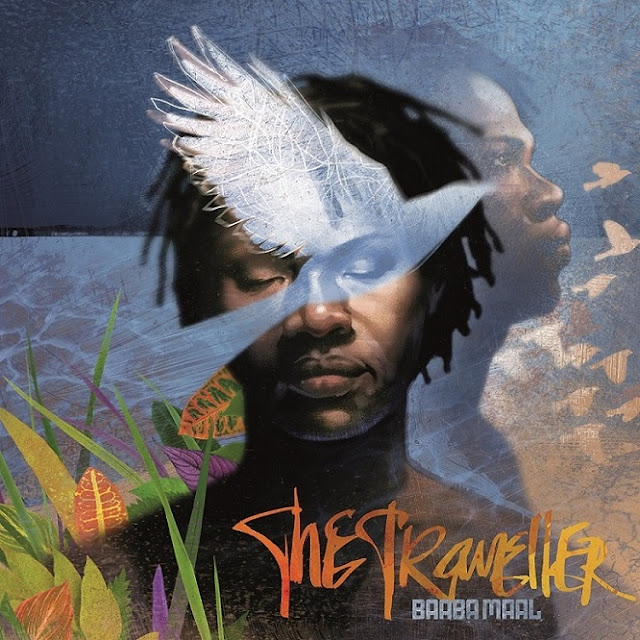
Baaba Maal - The Traveller - 2016


Senegalese singer, songwriter and guitarist Baaba Maal is at the forefront of the most avant-garde, combative and electrifying African music. He shows it again in his new work, The Traveler (the eleventh of his career) engraving on horseback between Senegal and London, a work of an artist with deep roots and a look set on the most creative musical horizons.


Baaba Maal had not recorded an album for six years, but during this time he has not remained idle. UN cultural ambassador, has directed an annual music festival, Blues du Fleuve, in his hometown of Podor in northern Senegal since 2006, and has been participating in the international project "Playing for Change", a multimedia music project and also a Foundation with the objective of gathering, recording and filming musical artists from different cultures.

Maal began his musical career with his friend Mansour Seck, blind guitarist and griot of his family, when he founded the group Lasli Fouta. In Paris they record the album Djaam Leeli in 1984, and on his return to Senegal he founded a new group, Dande Lenol. His first influences come from American R&B and soul, although he soon found his own style fusing the traditional music of his people with pop and reggae. In 1988 he published his first solo album, Wango, the first in a series of highly successful albums that also includes Baayo of 1991, Lam Toro of 1992, Firin'in Fouta of 1994, and Nomad Soul (1998). Jombaajo appeared in 2000, followed by Missing You (2001) and Television in 2009.

After a long career, it was almost inevitable that Baaba Maal would title any of his albums The Traveler. For him, travel and music are inseparable since he first left his hometown almost 40 years ago and has not stopped since then. His new work is a travel diary, "a beautiful and exciting celebration, meeting new places, finding unknown people until then and making good music with them," as he has acknowledged. In this sense, The Traveler evokes the pleasures of the trip and the satisfaction of returning home, "No matter how long I can be away, where I am, and what I am doing, I will always return to Fouta to feed my soul."

Maal has entrusted the work of production to Johan Hugo (The Very Best), an expert when it comes to translating African sounds into current trends. That means that the polyrhythms charge weight between tribal and danceable, and that traditional instruments coexist with fierce electric guitars (for example, the powerful "Fulani Rock", impressive start of the disc where there are them) and with silky keyboards ("One day ").

Other songs like "Kalaajo" propitiate a beautiful encounter between arpeggiated acoustics and electric guitars that could well come out of a Tinariwen record. The song that gives title to the album takes us back to the eighties afropop that brought so much victory to Maal, with the added curiosity of Winston Marshall's banjo (Mumford & Sons).

The duo of final songs, symbolically titled "War" and "Peace", are dominated by the recitations of the poet Lemn Sissay. The first of the pieces is abrupt, both in the interpretation of Sissay and in the instrumentation that surrounds it, in clear contrast to the delicate atmospheres that soften the message in the subsequent "Peace". The message is relevant and it is clear, Maal giving priority to his social work over that of a musician, to celebrate and preserve his people, his culture and the Fulani language.

01. Fulani Rock
02. Gilli Men
03. One Day
04. Kalaajo
05. Lampenda
06. Traveller
07. Jam Jam
08. War
09. Peace