Radio Salone

Travel Through Music

Post Top Ad

noviembre 11, 2019

Amadou & Mariam - Dimanche à Bamako - 2004

Mali has always been an intercultural meeting place between Arabs and Berbers from the north and people from South West Africa. That is why it has a rich and varied cultural life. His musical site is impressive: Salif Keita, Ali Farka Touré, Toumani Diabaté, Oumou Sangaré, Ballaké Sissoko, Tinariwen, Bako Dagnon ... are part of his cast of living legends. And, for some years, Amadou & Mariam. Dimanche à Bamako (2004), a record produced by Manu Chao, marked his rise to international fame. By then they had been singing together and reaping success in West Africa for thirty years with their hypnotic and bright blues, the "afro-blues."

Mariam Doumbia and Amadou Bagayoko were born in Bamako, capital of the country. Both lost their sight in childhood, and turned to music from their earliest age and it was music that joined them, in 1975, at the Institute for the Blind Young of Bamako in 1975. Since then they have never separated, nor when they emigrated to Abidjan (Ivory Coast), nor when they left for France, nor when international fame and recognition came.

Between 1974 and 1980, Amadou was part of the Les Ambassadeurs du Hotel group. Mixing African, Cuban, Indian, jazz, reggae, blues and pop influences, Amadou & Mariam made their way into the gigantic panorama of African artists. During the 90s they live a first season in Paris. They record a first album, Sou Ni Tilé, whose single "Je Pense A Toi" sells more than 100,000 copies in 1998 in the neighboring country. Follow a second album and a series of tours in Europe and the USA. In 2003, Manu Chao, already separated from Mano Negra, falls in love with his music and collaborates with them in the composition of a new album, Dimanche à Bamako, which comes out in 2004. The album, a small jewel of Malian music for western ears , receives many awards, in the United Kingdom and France among others, where more than 300,000 copies are sold.

The album opens at a rhythm with "M´Bifé", one of the six songs that Manu Chao co-writes with the African couple. But it is not until "Coulibaly" and "La Réalité" when Dimanche à Bamako takes flight with a mixture of African rhythms with the most modern electric instruments (guitar, keyboards, programming) and traditional (djembé, flute and percussion).

Registered between September 2003 and April 2004 in recording studios in Bamako and Paris, in addition to some sessions in a Mopti camp hotel, the fifteen songs of Dimanche à Bamako marked a quality leap in the contagious sound of Amadou & Mariam, which to date had published three large albums, Sou Ni Tilé (1998), Tjé Ni Mousso (1999) and Wati (2002), as well as several cassettes for the African regional market.

The reception of the album was unbeatable: he achieved the top positions of the European music charts of the world, and people, in addition to the renewed African sound of the Mali couple, continue to discover in "Sénégal Fast Food" one of the best songs that Manu Chao He composed in French from Mano Negra. A beautiful disk. A story to repeat.

Tracks list:
01. M´Bifé
02. M´Bifé Balafon
03. Coulibaby
04. La Réalité
05. Sénégal Fast Food
06. Artistiya
07. La Fête au Village
08. Camions Sauvages
09. Beaux Dimanches
10. La Paix
11. Djanfa
12. Taxi Bamako
13. Politic Amagni
14. Gnidjougouya
15. M´Bifé Blues


noviembre 04, 2019

Afro Celt Sound System - The Source - 2016

Global sound with artists from Europe and Africa have been the food of the Afro Celt Sound System project, an Afro-Irish group formed by Simon Emmerson (guitarist and producer), N'Faly Kouyate (kora and balafon), Johnny Kalsi (percussion), Moussa Sissokho (percussion) and Griogair Labhruidh (flutes, vocals and guitars), being part of the group, also, James McNally (multi-instrumentalist), Iarla Ó Lionáird (voice), Emer Mayoc (bagpipes) and Martin Russell (keyboards and programming), true architect of its sound.
Although Simon Emmerson had formed the band in 1991, it was not until 1996 when they made themselves known at the Womad festival, where they had extraordinary success. From that date on, their level of quality and innovation rose to the same extent that they released their six studio albums, Sound Magic (1996), Release (1999), Further In Time (2001), Seed (2003), Anatomic (2005 ) and The Source (2016), which celebrates its 20th anniversary and has won them the Best Group award at the 2017 Songlines Music Awards.

In these works, in addition, they have enjoyed the collaborations of artists such as Robert Plant, Sinéad O'Connor, Davy Spillane, Liam O'Flynn and Peter Gabriel, among others. The latter, founder of the Womad festival and owner of the Real World label, label that has published the first five albums of the group. They have also participated in films such as "Hotel Rwanda", "Stigmata", "Gangs of New York" and "Nikita".

Afro Celt Sound System fuses dance and electronic music in general, with Celtic and African rhythms, synthesizing the ideology of Womad: mixing cultures, using contemporary technologies - they work with computers - and taking care of the visual aspect, especially dance. His repertoire includes sheet music from 600 years ago and current pieces such as jungle and house. This perfect mix of ancient and contemporary sounds, what they call global dance, has placed them in the undisputed vanguard of World Music.

Tracks list:

01. Calling in the Horses
02. Beware Soul Brother
03. The Magnificent Seven (ACSS meets TDF)
04. Cascade
05. A Higher Love (tune "Monkswell Road")
06. Honey Bee
07. Where Two Rivers Meet
08. Mansani Cissé/Tàladh
09. Child of Wonder
10. Desert Billy (tune "The Balcony")
11. The Communicator
12. The Soul of a Sister
13. Kalsi Breakbet


noviembre 03, 2019

Tinariwen - Elwan - 2017

Elwan is the seventh studio album by the mythical Tinariwen, an emblematic group of the so-called desert blues that has been active for more than three decades and whose bands, such as Terakaft, Tamikrest or Bombino, recognize them as their greatest influence. True to his idiosyncrasy, but also forced by the often bloody agitation prevailing in his Saharan home, the referential band Tuareg acts, composes and records in a changing way, depending on the circumstances, but always marked by the sensation of the lost land. This time they recorded this album in California (curiously in a place of family connotations for the rock fans such as Joshua Tree National Park) and completed it at M’Hamid El Ghizlane, an oasis in southern Morocco. Appropriate dichotomy that reflects the content of the album.

"Elwan" means "elephants" and is a metaphor for describing those beasts that trample on everything around them. It is a vital album with songs of struggle, songs of hope and with that clean and characteristic sound of the Stratocaster guitar, in addition to the deep voices of its two main singers and composers Ibrahim Ag Alhabib and Abdallah Ag Alhoussenyi. The eleven compositions of the album offer their greatest virtue in the contrast between vigorous and relaxing themes: it opens with "Tiwàyyen", a blues with its swell of guitar stitches that ends those accelerations typical of the Gnawa rhythms (which brings memory to the group beginnings); in "Sastanàqqàm" the cyclical and hypnotic guitars seem to sing along with the band's choirs, and the clash with the reality of the band and its surroundings is evident in "Ténéré Tàqqàl", sad and spiritual regret for the sacking of their land. "Imidiwàn n-akàll-in" refers us to the solitude of the desert to, again, return with acoustic guitars and vibrant percussion in the "Assàwt" envelope. The album closes an emotional blues, "Nànnuflày", an abrasive theme about the vastness and emptiness of the desert.

With the notable collaborations, in addition, of influential American musicians such as Kurt Vile, Mark Lanegan and Matt Sweeny, in Elwan the band has managed, once again, to collect in the studio the fascinating trance of their live shows.

Tracks list:
01. Tiwàyyen
02. Sastanàqqàm
03. Nizzagh Ijbal
04. Hayati
05. Ittus
06. Ténéré Tàqqàl
07. Imidiwàn n-àkall-in
08. Talyat
09. Assàwt
10. Arhegh ad annàgh
11. Nànnuflày


noviembre 01, 2019

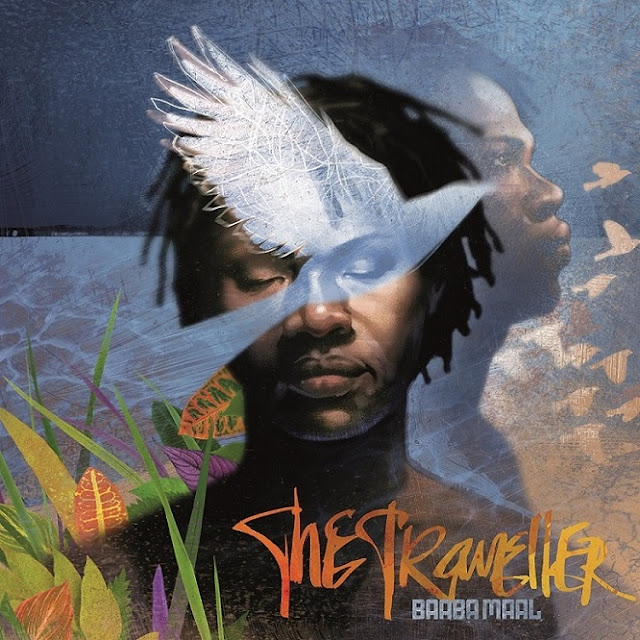
Baaba Maal - The Traveller - 2016


Senegalese singer, songwriter and guitarist Baaba Maal is at the forefront of the most avant-garde, combative and electrifying African music. He shows it again in his new work, The Traveler (the eleventh of his career) engraving on horseback between Senegal and London, a work of an artist with deep roots and a look set on the most creative musical horizons.


Baaba Maal had not recorded an album for six years, but during this time he has not remained idle. UN cultural ambassador, has directed an annual music festival, Blues du Fleuve, in his hometown of Podor in northern Senegal since 2006, and has been participating in the international project "Playing for Change", a multimedia music project and also a Foundation with the objective of gathering, recording and filming musical artists from different cultures.

Maal began his musical career with his friend Mansour Seck, blind guitarist and griot of his family, when he founded the group Lasli Fouta. In Paris they record the album Djaam Leeli in 1984, and on his return to Senegal he founded a new group, Dande Lenol. His first influences come from American R&B and soul, although he soon found his own style fusing the traditional music of his people with pop and reggae. In 1988 he published his first solo album, Wango, the first in a series of highly successful albums that also includes Baayo of 1991, Lam Toro of 1992, Firin'in Fouta of 1994, and Nomad Soul (1998). Jombaajo appeared in 2000, followed by Missing You (2001) and Television in 2009.

After a long career, it was almost inevitable that Baaba Maal would title any of his albums The Traveler. For him, travel and music are inseparable since he first left his hometown almost 40 years ago and has not stopped since then. His new work is a travel diary, "a beautiful and exciting celebration, meeting new places, finding unknown people until then and making good music with them," as he has acknowledged. In this sense, The Traveler evokes the pleasures of the trip and the satisfaction of returning home, "No matter how long I can be away, where I am, and what I am doing, I will always return to Fouta to feed my soul."

Maal has entrusted the work of production to Johan Hugo (The Very Best), an expert when it comes to translating African sounds into current trends. That means that the polyrhythms charge weight between tribal and danceable, and that traditional instruments coexist with fierce electric guitars (for example, the powerful "Fulani Rock", impressive start of the disc where there are them) and with silky keyboards ("One day ").

Other songs like "Kalaajo" propitiate a beautiful encounter between arpeggiated acoustics and electric guitars that could well come out of a Tinariwen record. The song that gives title to the album takes us back to the eighties afropop that brought so much victory to Maal, with the added curiosity of Winston Marshall's banjo (Mumford & Sons).

The duo of final songs, symbolically titled "War" and "Peace", are dominated by the recitations of the poet Lemn Sissay. The first of the pieces is abrupt, both in the interpretation of Sissay and in the instrumentation that surrounds it, in clear contrast to the delicate atmospheres that soften the message in the subsequent "Peace". The message is relevant and it is clear, Maal giving priority to his social work over that of a musician, to celebrate and preserve his people, his culture and the Fulani language.

01. Fulani Rock
02. Gilli Men
03. One Day
04. Kalaajo
05. Lampenda
06. Traveller
07. Jam Jam
08. War
09. Peace


octubre 31, 2019

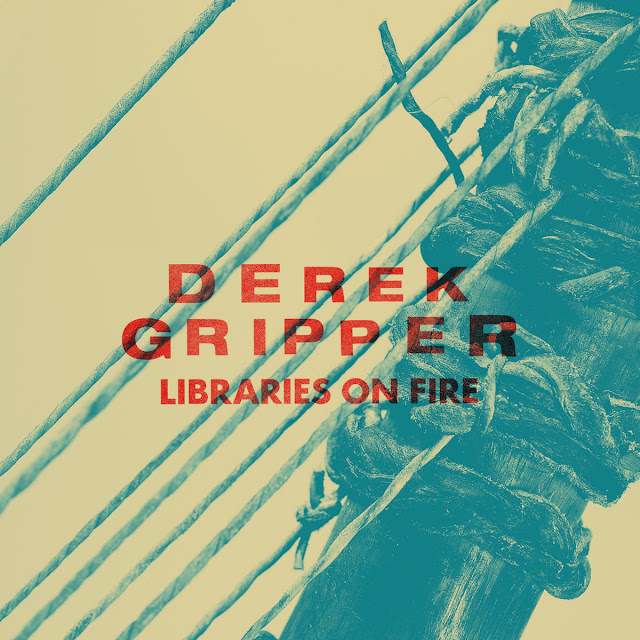
Derek Gripper - Libraries on Fire - 2016


Guitarist and composer Derek Gripper has forged an impressive career merging classical music with African folk traditions. Libraries on Fire (2016) is the second work dedicated to versioning themes of the great African masters of the kora.

The musician, based in Cape Town, began to stand out in 2001 with the Sagtevlei ensemble, a collaboration with jazz accordionist and trumpeter Alex van Heerden and a string quartet. The deconstructions of the group on South African music began to be known, stylistically, as "New Cape", a style that Gripper followed in his first release as a solo guitarist a year later. Over the next decade, Gripper continued to explore the limits of classical guitar both for himself and for other works by Sagtevlei. He also made an inspiring collaboration with the Indian board master Udai Mazumdar, being one of his pieces adapted by the acclaimed string ensemble Kronos Quartet.


The album One Night on Earth (2012) meant a new stage in his career by adapting the complex music of the kora (21-string African harp) for solo classical guitar. His transpositions of works by Toumani Diabaté, Ali Farka Touré and other teachers have had a spectacular reception. Even music legend John Williams said he thought it was "absolutely impossible ... until I heard Derek Gripper do it", and Toumani himself was so impressed that he invited the guitarist to collaborate with him in Mali.

This second album, Libraries on Fire, takes its title from a famous West African saying that "when a griot dies, it's like a library is burning." Recorded in one afternoon by Simon Ratcliff at the Sound and Motion Studios in Cape Town, Derek Gripper performs nine other pieces of kora, six of them from Toumani Diabaté's repertoire.

The results are, once again, spectacular, both in terms of technical brilliance and musicality. He also adds compositions by Ballaké Sissoko (from At Peace, 2012) and Amadou Bansang Jobarteh (member of the great dynasty of the kora of the Gambia) to his project, to create an African repertoire for classical guitar, being tremendously instructive to delight in his shots along with the original versions of kora. "Lampedusa," for example, was first heard on the 2014 album Toumani & Sidiki, and it sounds like Gripper doesn't miss a single note, despite the six strings of his guitar he plays in front of. at 42 that result from the two koras of Toumani & Sidiki Diabaté. Impressively wonderful.

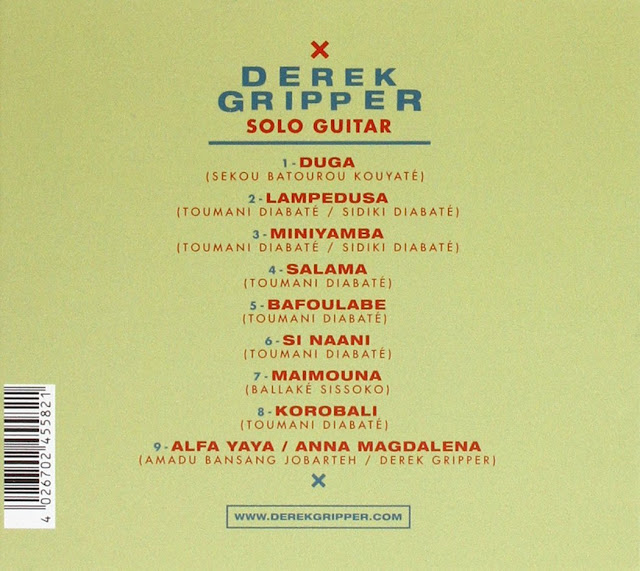
01. Duga (Sekou Batourou Koukaté)
02. Lampedusa (Toumani Diabaté / Sidiki Diabaté)
03. Miniyamba (Toumani Diabaté / Sidiki Diabaté)
04. Salama (Toumani Diabaté)
05. Bafoulabe (Toumani Diabaté)
06. Si Naani (Toumani Diabaté)
07. Maimouna (Ballaké Sissoko)
08. Korobali (Toumani Diabaté)
09. Alfa Yaya / Anna Magdalena (Amadu Bansang Jobarteh / Derek Gripper)


octubre 25, 2019

Nadah El Shazly - Ahwar

Nawa Recordings present Ahwar, the debut album by Nadah El Shazly. Starting out singing Misfits covers in a local punk band, then moving on to producing her own electronic tracks and making a name for herself in Cairo's underground scene, Nadah El Shazly's backstory is not that unusual. Her debut album on the other hand, is an entirely unexpected story. Two years in the making, Ahwar (Arabic for "marshlands") is an otherworldly record, not unlike an abstract mythological story-tale.

Opening with the mangled and filtered vocals of "Afqid Adh-Dhakira (I Lose Memory)", like an alien dream, the drones of a bowed double bass lead the listener into a drum groove that lays the groundwork for El Shazly's sultry and captivating presence. The Arabic prose lingers over interjections of slap-back delayed guitar twangs and an avant-garde arrangement of dissonant winds, horns, and seemingly random drum fills, ending with an eerie soundscape that wouldn't feel out of place in a giallo classic. Composed, written, and produced by El Shazly herself in collaboration with The Dwarfs Of East Agouza's Maurice Louca and Sam Shalabi on co-composition and arrangement duties, the album was crafted across two continents, between Canada and Egypt, and features the crème of Montreal's contemporary-classical and improvised music scene, most of whom are members of Shalabi's own Land Of Kush ensemble.

In between El Shazly's five original tracks, the listener is treated to an abstract conversion of Sayyid Darwish's classic "Ana 'Ishiqt (I Once Loved)". El Shazly's haunting vocal floats over broken kalimba and harp arpeggios which slowly intertwine with a free, bowed double bass improv to nestle within the breaks between Younes Al-Qadhi's early 20th century verses of love and betrayal. More than that, it is difficult to really describe, but imagine the worlds of Nico, Björk, and Annette Peacock with the Arabic language as their mother tongue, re-approached through acoustic avant-jazz harmony and re-constructed with a dash of Kamilya Jubran's modern styling of Arabic maqam and you may be somewhere close. Recorded and delicately mixed through miles of analog cabling by Thierry Amar and mastered by Harris Newman, the album is adorned with the surrealist artwork of Egyptian artist Marwan El-Gamal and designed with custom typography by Egyptian designer Valerie Arif.


1. Afqid Adh-Dhakira (I Lose Memory) 04:39
2. Barzakh (Limen) 08:19
3. Palmyra 05:09
4. Ana 'Ishiqt (I Once Loved) 06:34
5. Koala 07:04
6. Mahmiya (Protectorate) 06:08

octubre 24, 2019

Lindigo - Mile Sek Mile - 2014

Lindigo is a music group from Reunion Island, a French overseas department in the southwest Indian Ocean. Malayan group founded in 1999, is directed by Olivier Araste, his singer, originally from Paniandy

01. Intro
02. San Palto
03. Voila
04. Moral De Listwar?
05. Cimendef
06. Tany Be
07. Fomba Gasy
08. La Kaz Zaza
09. Mile Sek Mile
10. Doulvede
11. Maloya Man
12. Pourquoi Pas?
13. Vel Has
14. La Kazamwin
15. Rano
16. Mile Sek Mile Roots
17. Frisson


octubre 24, 2019

Gigi with Material - Mesgana Ethiopia

Recorded live on July 25, 2009 at Festival Glatt & Verkehrt, Krems, Austria/Produced by Bill Laswell and Giacomo Bruzzo.

 Baty (4:28)
    Gudfela (5:38)
    Shema (6:51)
    Mata Mata (7:42)
    Shemum Mune (8:11)
    Tizita And Zerafewa (10:58)
    Ethiopia (6:56)
    Zomaye (6:11)


Baty by Gigi w Material on Grooveshark

Ejigayehu "Gigi" Shibabaw (vocals)
Bill Laswell (bass)
Abegasu Shiota (keyboards)
Hamid Drake (drums)
Aiyb Dieng (percussion)
Dominic Kanza (guitar)
Steve Bernstein (slide trumpet)
Peter Apfelbaum (tenor sax, flute, percussion)
Alemayehu Fanta (mesinko, vocals [6])


octubre 24, 2019

Msafiri Zawose - Uhamiaji

Tanzania’s Msafiri Zawose has been one of the biggest slept-on musical forces from the region. That’s about to change with the imminent arrival of a new album that will redefine the boundaries of gogo music. 

The Wagogo people are his traditionally nomadic tribe from the center of Tanzania, known for their musicality and made famous by Hukwe Zawose - Msafiri’s father, who toured the world as a part of Peter Gabriel’s Real World roster in the 80s and 90s. Working with Santuri East Africa, the much respected platform that has been responsible for some of the most interesting collaborations coming out of East Africa in recent years, the son continues his eminent father’s journey. 

In August 2016, Santuri traveled to Bagamoyo on the Tanzanian coast with SoundThread’s Sam Jones, whose recent works with Orlando Julius and remixes for Mugwsia International and Sarabi have been rapturously received. 

Laying down the foundations of the album over two weeks, Zawose and Jones developed a working relationship that was highly charged - their mutual respect for each others talents allowing them to work through difficult periods - hewing the raw materials into the hypnotic, revelatory material shared here. The process was never easy, but Msafiri was driven to explore new forms for traditional music, much as his father had with 2002’s experimental collaboration with ambient / electronica producer Michael Brook on the album Assembly. 

The tracks assembled here have been created within a deeply collaborative process, primarily in person, and then via endless back and forth online between Jones’ studio in London and Zawose’s compound in Bagamoyo. Set to be completed in London in November when Msafiri visits the UK, the music here remains profoundly gogo, but is infused with a organic electronic aesthetic brought about by Jones’ exceptional production and feeling for textures. The tracks give off a borderless feeling, soaking up influences from across the globe - an afro-futurist journey that takes in dub, balearic, ambient and electronic vibrations alongside Zawose’s hypnotic playing and emotive, plaintive vocals. 


  1. "Nzala Urugu"
  2. "Pole Pole"
  3. "Chibitenyi"
  4. "Nosaga"
  5. "Kunyemo"
  6. "Mbeleko"
  7. "Tamaduni"
  8. "Tusife Majanga"
  9. "Mazingira"
  10. "Mdara"
  11. "Mashariki Ya Mbali"
  12. "Malugaro"
  13. "Hali Halisi"

octubre 23, 2019

Mighty Mo Rodgers & Baba Sissoko - Griot Blues

Mighty Mo Rodgers is a recognized artist a legend of the American blues. He has won many prestigious music awards in the United States and Europe. Mighty Mo Rodgers is a world-class musician whose music is like a breath of fresh air in the world of blues and R&B music.

Mighty Mo Rodgers won many awards: "The Handy Awards" for his album "Blues Is My Wailin 'Wall", (1999); "Living Blues" nominated for the contemporary blues album "Red White and Blues"; "Trophees France Blues" declared him the best international artist for 2001 and 2002; the best composer award (2003); "CHIC De L'Annee" gave him the best blues artist name (2007).

Baba Sissoko is the owner of a great voice and a master of tamani drums from West Africa, as well as many other instruments (ngoni, guitar, drums, balafon, kalabas, sildrum, kamalengoni). His exceptional sensitivity to the musical expression of other musicians led him to collaborate with music stars from around the world such as Salif Keita, Ibrahim Ferrer, Habib Koite, Youssou N'Dour, "Buena Vista Social Club" and many others. Baba Sissoko belongs to a dynasty of Griot Malian singers who possess and transmit the archaic tradition.

Mighty Mo Rodgers - vocal, keyboards
Luca Giordano - guitar
Walter Monini - bass guitar
Pablo Leoni - drums
Baba Sissoko - ngoni, tamani, vocal, guitar

01. Shake 'em Up Charlie (4:09)
02. Mali To Mississippi (3:37)
03. Nalu - Mother (3:24)
04. Donke   Dance (4:53)
05. Demisenu - Children (2:10)
06. The Blues Went To Africa (3:49)
07. Djeli - Griot - Storyteller (3:47)
08. Drunk As A Skunk (3:29)
09. What Is The Color Of Love (3:58)
10. Mo Ba (3:51)
11. Griot Blues (4:38)
12. Kalimba #12 (0:51)


octubre 23, 2019

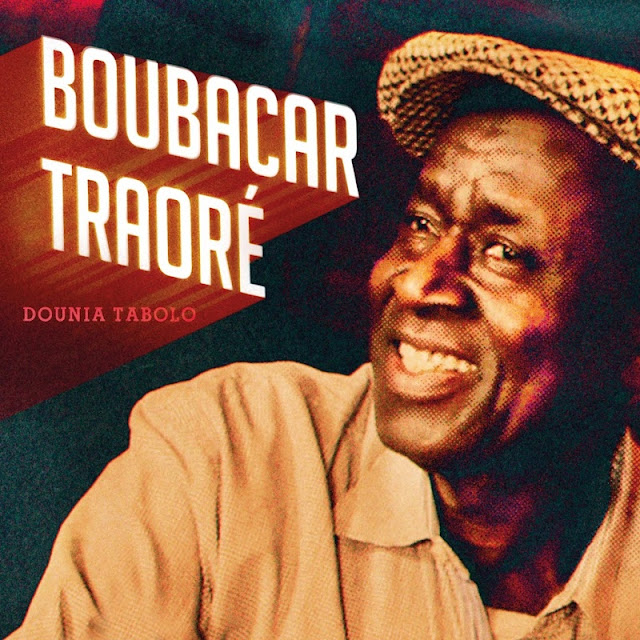
Boubacar Traoré - Dounia Tabolo


Boubacar Traoré (* 1942, Kayes (Mali) is a well-known singer, lyricist and Malian guitarist. Also known as Kar Kar, "he who bargains too much" (in bambara, one of the Malian languages), in reference to his way of playing to football: "a nickname I have since I was young, when people shouted" kari, Kari "(haggle, haggle), the name stuck to me".

Traoré began to be known for the first time in the early 60s, when songs like "Kar Kar Madison", "Sunjata", "Kayeba" and "Mali Twist" did not stop playing almost every day on the radio. He had begun to play the guitar in a self-taught way and had developed a unique style, a mixture of American blues, Arabic music and kassonké, a traditional music style of his native region.

He became a superstar in Mali and a symbol of the once again independent country (see History of Mali). His songs were very popular and used to appear on the radio. However, since he did not make recordings, and neither did he pay rights to musicians, he was very poor and had to do odd jobs to survive.


1. Dounia Tabolo 6:53
2. Ben De Kadi 5:45
3. Yafa Ma 5:24
4. Kanou (Kanga Keniogon Fe) 7:13
5. Mousso 4:34
6. Dis Lui Que Je L'Aime Comme Mon Pays 7:43
7. Badialo 3:43
8. Duna Ma Yelema 5:34
9. Je Chanterai Pour Toi 5:23
10. Maciré 6:53
11. Narena 4:43
12. Askia Mohamed 5:14
13. (Bonus) Dis Lui Que Je L'Aime Comme Mon Pays (Radio Edit) 3:47


octubre 23, 2019

Maryam Saleh, Maurice Louca, Tamer Abu Ghazaleh - Lekhfa الإخفاء

Lekhfa is the creation of Maryam Saleh, Maurice Louca and Tamer Abu Ghazaleh, three legendary musicians who came of age in 1990s Cairo. Decades later, the three trailblazing musicians, each having paved their way through the alternative Arabic music scene, have united to create a stunning new album. A rapturous combination of extraordinary musical talent and creativity, Lekhfa gives birth to an off kilter sound where layers of grit and beauty intertwine in and around the dystopian poems of their contemporary Mido Zoheir, whom they’ve dubbed the fourth ‘member’ in this creation, and one of the most talented Egyptian poets of their generation. 

1. Kont Rayeh 
2. Nefsif Akli 
3. Ekaa Maksour 
4. Mathaf Fonoun El Ghesh 
5. Mazzikaw Khof 
6. El Shahwa Wel Soaar 
7. Teskar Tebki 
8. Woshoush El Leil 
9. Makonsh Wakoun 
10. Ayez Awsal


octubre 22, 2019

Diron Animal - Alone

Born and raised in the Angolan ghetto of Cazenga, the instrumentalist's new album, now based in Portugal, is a melting pot of musical styles and cultures.

"I come from tribal music," says Diron. "I had a traditional music group, then I moved to a Capoeira group where I was a main run and played batuque. At that time I also began to introduce Hip Hop and Kuduro styles. Then I mixed Kuduro with Hip Hop and Kuduro with Rock. Now I am making music for all people and all ages. ”

With a foot firmly established in its ghetto roots, the album is a personal exploration: "Cazenga is a place where many Angolan dances were invented, where children roam barefoot and without food, but can transform their struggles into creativity," says Diron.

This movement and fight is the core of the new album. Traditional African styles combined with the frenetic style of electronic music in Portugal culminate in a vibrant, energetic and rhythmic record that deals with both adversity and positivity.

1. Kema 04:07
2. Ghetto Ghetto 04:03
3. Love Family 05:08
4. Oxala Kuanbote 04:20
5. Don't Stop 03:27 
6. Diculo 02:30
7. Bitch My Love 03:01
8. NCrazy feat. Spoek Mathambo 03:21
9. LM 04:17
10. Help 04:08


octubre 21, 2019

The Nile Project - Jinja

The Nile Project is a laudable initiative towards Pan-Africanism: artists from eleven countries through which the river passes and its tributaries meet annually to teach courses and raise awareness about the need to take care of it. A round idea and a musical wonder, because it reaches moments of an absolutely amazing intensity and rapport.
The project, sponsored by the Egyptian ethnomusicologist Mina Girgis and the Ethiopian singer and cultural activist Meklit Hadero, began in January 2013 when 18 artists from Egypt, Uganda, Ethiopia, South Sudan and Sudan met to develop a collaborative creative process It lasted 10 days. The result was Aswan (2013) where the successful trajectory that these and these ambassadors and diplomats of music were already expected. The group of interpreters goes on a tour of the world to spread the ecological and intercultural message, an event that in 2016 they take advantage of to record Jinja (2017) in Uganda, where the sources of the Nile are located.
Beyond the feeling of brotherhood that it promotes, the band's music is attractive precisely when they reproduce their union values, when the traditions of Egypt, Ethiopia, Sudan, Uganda ... (and their respective instruments) are integrated or alternated throughout of the same piece. A harmony that sounds surprisingly accessible even to the western listener, despite the diversity of musical instruments, aesthetics, styles and languages. The themes are composed of the performers in six languages. The voices of the Egyptian Dina El Wedidi, the Ethiopian Selamnesh Zemene (component of Ethiocolor), or the Sudanese Alsarah spectacularly star in this mega-musical project, also highlighting the versatility, energy and great voice of Burundian Steven Sogo.
01. Inganji - feat. Sophie Nzayisenga and Selamnesh Zemene
02. Allah Baqy - feat. Dina El Wedidi and Sarah Abunama-Elgadi
03. Ya Abai Wuha - feat. Selamnesh Zemene
04. Omwiga - feat. Micheal Bazibu
05. Uruzi Nil - feat. Steven Sogo
06. Dil Mahbuby - feat. Dina El Wedidi and Mohamed Abozekry
07. Tenseo - feat. Jorga Mesfin, Mohamed Abozekry and Selamnesh Zemene
08. Marigarita - feat. Sophie Nzayisenga, Hany Bedair, and Selamnesh Zemene
09. Biwelewele - feat. Steven Sogo
10. Mulungi Munange - feat. Micheal Bazibu, Sophie Nzayisenga and Steven Sogo


octubre 21, 2019

Orchestre Les Mangelepa - Last Band Standing

Orchestre Les Mangelepa was formed in July 1976. Mangelepa extensively toured East and Central Africa and are known for their spectacular stage shows. A search for quality instruments brought the Congolese band Orchestre Baba National to Kenya in 1975.

However due to domination by members of the older generation in the orchestre Baba National Band, a group of young and vibrant members led by Bwamy Walumona, pulled out and formed their own band- Orchestre Les Mangelepa, in order to express a more youthful sound. Thus, Les Mangelepa, an orchestra that prides in quality ageless music was born on the first day of July 1976. The band quickly gained popularity in Nairobi. In the same year of the Band’s formation Jack Gerchun, an Israelite restaurant owner being impressed by their stage frolics accepted the band to frequently perform at his restaurant.

In the subsequent years they held performances at Garden Square, Alliance Club and also toured Kenya. However the band was never too keen to devote themselves fully to live performances and so they concentrated on practicing and recording music. To date the band has recorded more than 13 albums. In 1979, after Idi Amin’s reign Les Mangelepa were called to perform at Lugogo Stadium to establish peace and tranquility among Ugandans but shortly into the performance, the crowd became chaotic disrupting the performance. Being an Ochestra, Les Mangelepa is equipped with top vocalists, guitarists, Drummers, pianists and tenor & alto saxophonists. Having being around for over 30years, the band carries a taste of the past into the present while pressing on to appeal even in the future.https://www.musicinafrica.net/directory/orchestre-les-mangelepa

1 Kanemo 9:07 
2 Malawi zikomo 9:59 
3 Mbungu 9:47 
4 Maindusa 9:21 
5 Nyako konya 10:18 
6 Suzanna 7:35 
7 Mimba 8:48 
8 Ma lilly 9:28