Radio Salone

Travel Through Music

Post Top Ad

Mostrando entradas con la etiqueta kanou. Mostrar todas las entradas
diciembre 17, 2025

Issa Bagayogo - Tassoumakan - 2004


Issa Bagayogo (nacido en 1961) es un músico maliense. Ha grabado cuatro discos con el sello Six Degrees Records. Issa presta su voz y toca el kamele n´goni (un instrumento de seis cuerdas de África Occidental parecido al banjo) mientras Yves Wernert es el productor y teclista. Bagayogo mezcla la tradición de Malí con música pop occidental. 


En 2004, Bagayogo grabó su disco titulado "Tassoumakan", que significa "voz de fuego". También obtuvo un enorme éxito y las canciones están más estructuradas y son también más optimistas. También se pone especial atención en las voces femeninas de acompañamiento. Definitivamente, es el disco más sofisticado.


01. Ciew Mawele 

02. Diama Don 

03. Koroto 

04. Numu 

05. Kanou 

06. Djigui 

07. Kalan Nege 

08. Dya Bana 

09. Dya 

10. N'Deri 

11. Touba 

12. Chauffeur 

13. Furu 

14. Joola 


enero 05, 2022

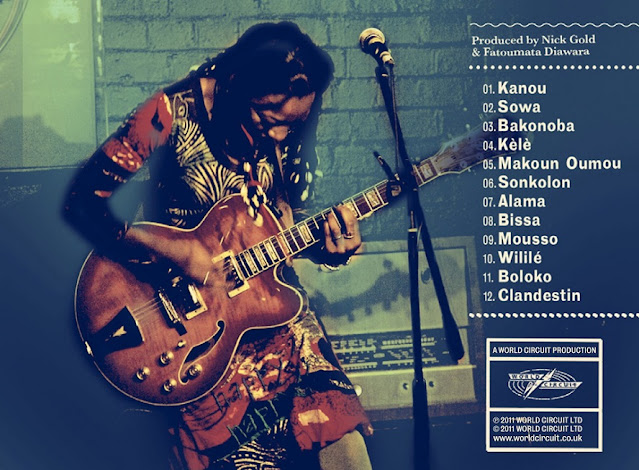
Fatoumata Diawara - Fatou - 2011


Fatou is the first album and the name by which Fatoumata Diawara is known, an actress and singer from Mali living in Paris, sponsored by the prestigious Alí Farka Touré and Oumou Sangaré label, World Circuit. Her magnificent voice acts as a great protagonist, with her own songs that convey folk melancholy and pop sound that naturally integrates ngoni or pumpkin.


Born in Ivory Coast to a Malian family linked to the world of art and dance in the mythical Wassoulou region of western Mali, Fatou became well known for her participation in films that have been very popular in western Mali. Africa (Mali, Guinea, Senegal and Burkina Faso). She also began in the artistic world participating in various theatrical productions, in her country and in France. In Paris, she Fatoumata sang in bars, where she was discovered by Cheikh Tidiane Seck, a magnificent composer and producer (of artists such as Salif Keita, Dee Dee Bridgewater or Oumou Sangaré). With the help of this popular Malian keyboardist and composer, she returns to Bamako and participates in various musical projects: both on the album Seya by the wonderful Oumou Sangaré and on the album by the Afro-American jazz singer Dee Dee Bridgwater, Red Earth. Her silky contemporary voice is also on recent records by Cheikh Lô, Afrocubism and Herbie Hancock.


After learning to play the guitar (encouraged by Rokia Traoré) and composing a good collection of songs, she made her debut for the prestigious British label World Circuit by the very hand of Oumou Sangaré, to whom she lovingly dedicates "Makoun Oumou", a guide and a role model when it comes to women's liberation ideals.


With the production of magician Nick Gold, she records twelve pieces in which her crystalline voice stands out. In her mix of styles, "Kanou" exudes sweetness with her message of the need for love as a restorative function of loneliness, the same tenderness that she shows to talk about the drama of emigration in "Clandestin". "Boloko" is a plea against female cutting; in "Bakonoba", it is an Afro-jazz electric guitar that surrounds a reflection on how cruel words are sometimes; On the other hand, in "Sowa", "Sonkolon" and "Alama", it is the cry of her deep voice that flies over a recollection that aims to encourage mothers not to abandon their children and highlight the suffering of the and the orphans, or the one that she had to live to change her destiny. Nothing escapes the dissection of an outstanding voice that certifies a magnificent album. 


Tracks list:

01. Kanou

02. Sowa

03. Bakonoba

04. Kèlè

05. Makoun Oumou

06. Sonkolon

07. Alama

08. Bissa

09. Mousso

10. Wililé

11. Boloko

12. Clandestin


junio 15, 2021

Ibrahima Cissokho & Le Mandingue Foly - Yanfu - 2016


Ibrahima Cissokho offers with his kora an authentic Afro rock groove. With one foot in the tradition of his condition as Griot, the other in contemporary music with amplified melodies of rock and funk as references, created by his way of playing the kora, Mandingo music of the 21st century.


Living in France since 2008, Ibrahima, in voice and kora, is a complete artist. Charismatic singer-songwriter, who did not hesitate to take advantage of the opportunities that make him a unique musician. He surrounded himself with his faithful backing band, Le Mandingue Foly, with whom he made a European tour and scenes from around the world, thus creating a tasty cocktail of influences, his powerful and warm voice, he sang solidarity, love, the awakening of the spirits. He wishes to transmit the values ​​that are dear to him and engender unity through his creations.


IbrahimaCissokho: Voice, Kora

Françoise Veilhan: bass, percussion, vocals

Laurent Baradel: flautapeul

Gregory Boudras: Drums


Guests:

KhadimSene: Sabars

Petit Adama Diarra: Djembe, Acoustic Guitar

Guillaume Lavergne: keyboards

HadjaKouyaté: Choirs

SoryDiabaté: baláfon

Orlando Julius: Saxophone 


01. Bayo

02. Solidarité

03. Tiedo (feat. Petit Adama Diarra&SoryDiabate)

04. SerigneSaliou

05. Yanfu (feat. Petit AdamaDiarra&HadjaKouyate)

06. Diula

07. Kanou (feat. SoryDiabate)

08. Manduleen

09. DinalaSetsi

10. Sénégal (feat. Orlando Julius)

11. Mouridoulaye

12. MandingueFoly (feat. Petit AdamaDiarra)


octubre 23, 2019

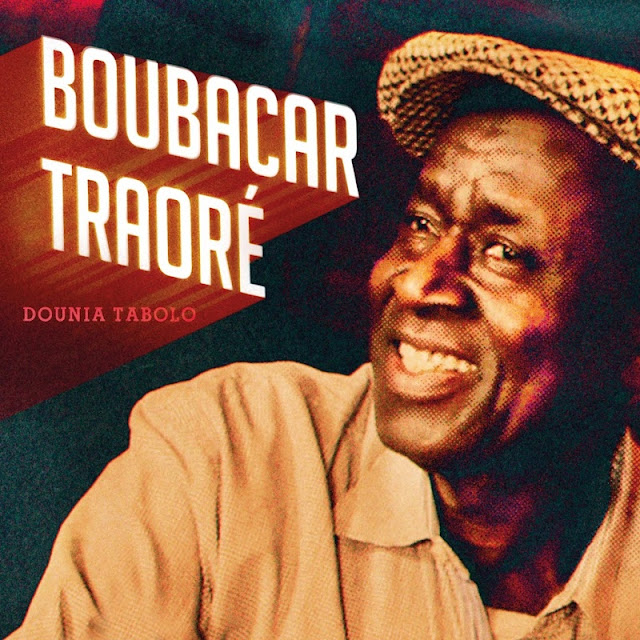
Boubacar Traoré - Dounia Tabolo


Boubacar Traoré (* 1942, Kayes (Mali) is a well-known singer, lyricist and Malian guitarist. Also known as Kar Kar, "he who bargains too much" (in bambara, one of the Malian languages), in reference to his way of playing to football: "a nickname I have since I was young, when people shouted" kari, Kari "(haggle, haggle), the name stuck to me".

Traoré began to be known for the first time in the early 60s, when songs like "Kar Kar Madison", "Sunjata", "Kayeba" and "Mali Twist" did not stop playing almost every day on the radio. He had begun to play the guitar in a self-taught way and had developed a unique style, a mixture of American blues, Arabic music and kassonké, a traditional music style of his native region.

He became a superstar in Mali and a symbol of the once again independent country (see History of Mali). His songs were very popular and used to appear on the radio. However, since he did not make recordings, and neither did he pay rights to musicians, he was very poor and had to do odd jobs to survive.


1. Dounia Tabolo 6:53
2. Ben De Kadi 5:45
3. Yafa Ma 5:24
4. Kanou (Kanga Keniogon Fe) 7:13
5. Mousso 4:34
6. Dis Lui Que Je L'Aime Comme Mon Pays 7:43
7. Badialo 3:43
8. Duna Ma Yelema 5:34
9. Je Chanterai Pour Toi 5:23
10. Maciré 6:53
11. Narena 4:43
12. Askia Mohamed 5:14
13. (Bonus) Dis Lui Que Je L'Aime Comme Mon Pays (Radio Edit) 3:47