Radio Salone

Travel Through Music

Post Top Ad

febrero 19, 2023

Youssou N'Dour - History - 2019 - Senegal


Senegal's greatest living artist is back with an important album that alternates subtly between tradition and modernity. A marvelous balance between modern sounds and its African roots, 'Historia' is an album full of variety and eclecticism. Tracks include a tribute to their late bassist, Habib Faye, the beautifully written song ''Confession'', a great remix of the song ''Birima'' with Seinabo Sey, ''Hello,'' a duet with Mohombi, along with many other treasures. Youssou N'Dour is a Senegalese singer, songwriter, occasional actor, businessman, and politician. In 2004, Rolling Stone magazine described him as ''perhaps the most famous singer alive'' in Senegal and in much of Africa. From April 2012 to September 2013, he was Senegal's Minister of Tourism.


1.Habib Faye - 3:39

2.Birima - con Seinabo Sey - 3:18

3.Confession - 4:00

4. Ay coono la - 3:56

5. My child - con Babatunde Olatunji - 4:08

6. Macoumba - 4:26

7. Salimata - 4:14

8. Hello (Remix) - con Mohombi - 3:31

9. Takuta - con Babatunde Olatunji - 3:31

10.Tell me - 4:06


enero 09, 2023

Terrakota - World Massala - 2010


In June 2010, Terrakota celebrated its 10th birthday with the avant-première of the documentary ‘On top of the world – Roadmovie of Terrakota in the Himalayas’ about the band’s adventures in India and with a big, three-hour long concert in Lisbon with a battery of guests. That same month, the bands first single of it’s upcoming fourth album came out, ‘World Massala’, a first product of the band’s trip to India. The single is a groundbreaking musical fusion that might never have been done before: Punjabi afro-reggae. Bridging the gap between India and Jamaica, but also between Rajasthani folk and classical India. While the gypsy musicians of Rajasthan Roots take care of the

rhythm and give the song some authentic gypsy guts, the carnatic singers Mahesh Vinyakram and Bollywood-star Vasundhara Das take the song to new mystical heights.


The single announced the arrival of the fourth studio album, “WORLD MASSALA” (2010), recorded and produced and released in October 2010 by Ojo Música/Galileo Music Communication. On this new work, Terrakota keeps on mashing up frontiers to bring together music and people from around the world, expanding their musical horizons to Rajasthan, Angola, classical India, urban Cuba, and beyond. Terrakota’s Afro/world mestizo explosion now also has a proper term: world massala! World standing for world music and massala for the fusion, as massala is a mixture of species used a lot in

Indian cuisine. The recipe? Bringing new innovative musical fusions without any fear of experiment, just jamming until you find a formula where ancient musical traditions embrace the 21st century.

Other than the Indian guests, the album includes recordings with the Angolan singer-songwriter Paulo Flores, the Cuban rapper Kumar and keyboard, bass and brass from the Lisbon-based funkband Cool Hipnoise. That song with brass is a powerful afrobeat, born in the wake of the band’s side-project, the KotaCool Afrobeat Orchestra, that has done some powerful gigs around Lisbon since 2009.


[b]01. World Massala

02. Kay Kay

03. Ilegal

04. I am

05. Slow Food

06. Né Djarabi

07. Pé na Tchon

08. Chelo Habibi

09. Gripe Económica

10. Ualelepo

11. Raíz[/b]


enero 03, 2023

Souad Massi - Raoui - 2001


Souad Massi is the artist guiding the new generation of Algerian musicians. With her sweet voice, she sings in Arabic music that is close to folk-rock, a delicate Algerian folk-rock rich in soft harmonies, which she reinforces with human and sensitive lyrics. Born in Alger in 1972 into a family of artists, at the age of 17 she Souad she was already running on the stages of her country, guitar on her shoulder, performing solo. In his training he has drawn from many musical sources: folk, country, classical music, Arabic-Andalusian, Algerian chaâbi, raï... His music is influenced by the three cultures that coexist in his native Algeria: the Amazigh culture of Kabylia (Berber), Arabic and French.


She publishes her first work in 1997 and breaks sales records. She begins to have difficulties in her country (for which she represented the free expression of a woman) and that is when she receives an invitation to participate in the "Women of Algeria" festival. Paris discovers Souad Massi and is impressed by her presence, overcoming language barriers. After the concert, she signed with the Island-Mercury label the publication of Raoui in 2001, with a reception that exceeded all her forecasts. She also had the support of some of her countrymen such as Idir, the Orchester National de Barbès and other musicians with whom she shared the stage; later he recorded some duets with recognized artists, of which "Noir et blanc" stood out, recorded with Ismael Lô, a song that arises as a reaction to the xenophobic wave that travels the world after the events of September 11 in New York and that is included as bonus track on a later edition of the disc.


Tracks list:

01. Raoui

02. Bladi

03. Amessa

04. Tant pis pour moi

05. Noir et blanc (duo con Ismael Lô)

06. Hayati

07. Nekreh el Kelb

08. Denya

09. Khsara Aalik

10. Rani Rayha

11. J'ai pas de temps

12. Awham

13. Lamen

14. Enta Dari

15. Matebkiche

16. Paris (duo con Marc Lavoine)

17. Tant pis pour moi (versión single)


Sitio web oficial: Souad Massi


octubre 25, 2022

CLUB 70´s - the dancing years - 2 CDs .VOL 1 Y 2 - 1993


Disc 1


01. Boney M. - Ma Baker

02. Harpo - Moviestar

03. Kc and the sunshine band - That's the way

04. Village People - Y.M.C.A.

05. Gloria Gaynor - I am what I am

06. Grace Jones - La vie en rose

07. Third World - Now that we've found love

08. Stacy Lattisaw - Jump to the beat

09. Luisa Fernandez - Lay love on you

10. Clout - Save Me

11. Sheila B. Devotion - Spacer

12. The Drifters - Kissin in the back row of the movies

13. Leo Sayer - You make me feel like dancingt

14. Dr. Hook - Sexy Eyes

15. Earth, Wind & Fire - September

16. Sugarhill Gang - Rapper's Delight


Disc 2


01. Garland Jeffreeys - Matador

02. Donna Summer - Bad Girls

03. Labelle - Lady Marmalade

04. Dschinghis Khan - Genghis Khan

05. Lou & the hollywood bananas - Kingston

06. Jimmy Cliff - You can get it if you really want

07. The hues corporation - Rock the boat

08. George mccrae - Rock your baby

09. Curtis Mayfield - Superfly

10. Showaddywaddy - Under the moon of love

11. Dee D. Jackson - Automatic Lover

12. Van Mccoy and His Orchestra - the Hustle

13. the Spinners - Working my way back to you

14. Rose Royce - Car Wash

15. Blondie - Heart of glass

16. M - Pop Muzik


octubre 12, 2022

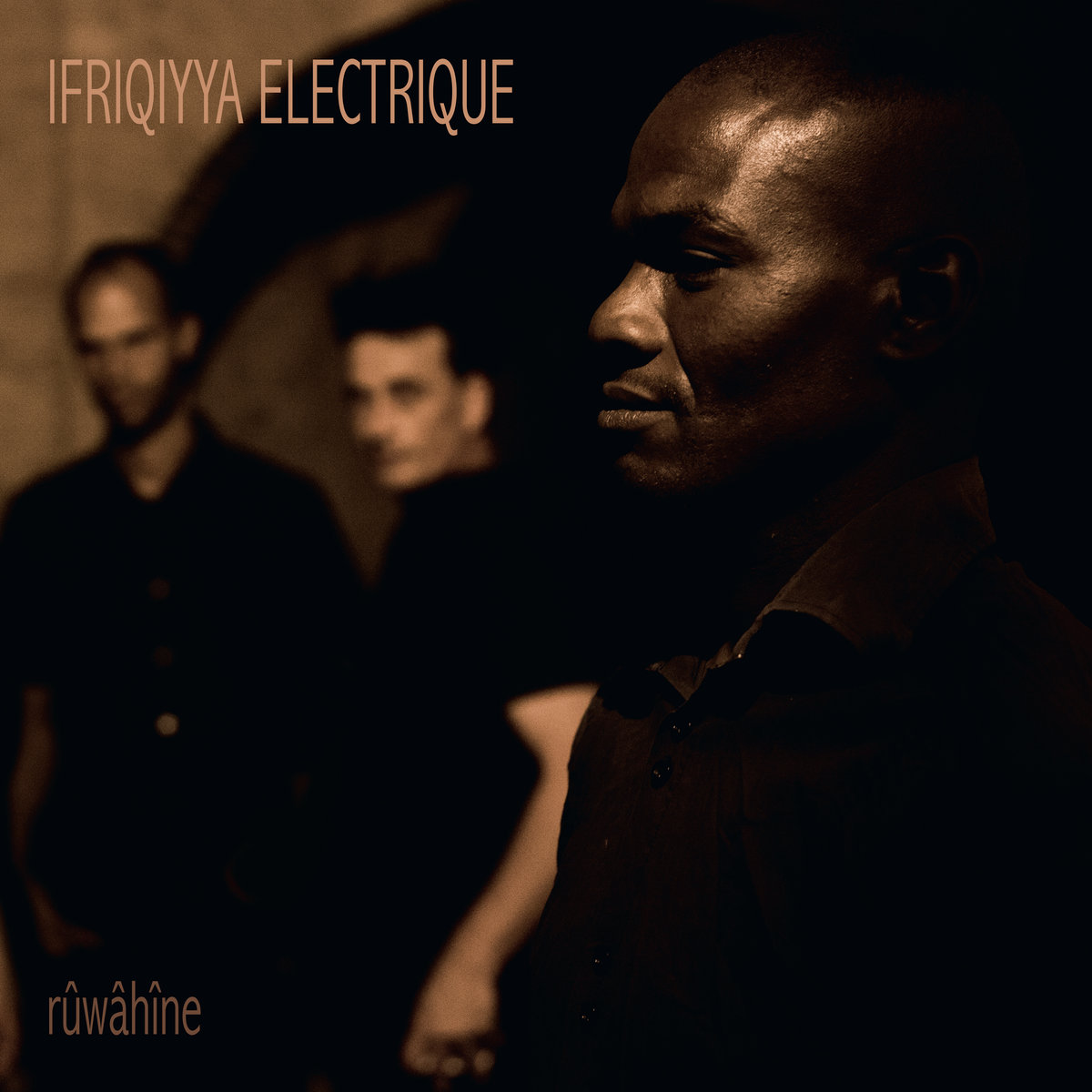
Ifriqiyya Electrique - Rûwâhîne


Sufi trance musicians and rituals – from the depths of the Tunisian desert – in conversation with post-industrial sonics. 


‘No theatre or stage or audience. The rûwâhîne have possessed and contorted the bodies of the Banga. Teenagers leap to the floor, their legs arched and tense, glaring transfixed [while] girls dance wildly, … accelerating the rhythm of the hand percussion’ 


‘This is, then, most certainly not a “world music” project (still less an ethnomusicological one), but a wild process of improvisation and re-composition that brings traditional instruments face to face with computers and electric guitars… [My work] is driven towards elevation, sweat, blood, poetry and tears – not to some pretty colour postcard’ — François R. Cambuzat / Ifriqiyya Electrique


1. Laa la illa Allah 02:49 

2. Qaadrii - Salaam Alaik - Massarh 07:32 

3. Mawwel 01:09 

4. Zuru el Haadi - El Maduulaa - Maaluuma 06:34 

5. Stombali - Baba ‘Alaia 03:39 

6. Annabi Mohammad - Laa la illa Allah - Deg el bendir 09:15 

7. Lavo - Baba Marzug - Sidi Saad - Allah 04:46 

8. Arrah arrah abbaina - Bahari - Tenouiba 05:42 

9. Sidriiya 02:05


octubre 11, 2022

Hanine y Son Cubano - Arabo-Cuban - 2002


tracks list:

01. La llave - Albi Wa Muftaho

02. Afro - Ana Wel Azab We Hawak

03. Cuando - Imta Ha Ti'raf

04. El mambo de los recuerdos - Aala Bali

05. El huerfanito - Ya Habibi Ta'ala

06. La flor - Ya Zahratan Fi Khayali

07. El gallo - Il Hilwa Di

08. El día feliz - Kan Ajmal Yom

09. Pot pourri - Medley

10. Descarga

11. El mambo de los recuerdos - Aala Bali (remix Michel Eléftériades)


octubre 03, 2022

Boulpik - Konpa Lakay - 2014


Boulpik is a group that was formed in Port-au-Prince a dozen years ago that, since its inception, have given continuity to a musical tradition that emerged in the streets, as entertainers in squares and private events, recalling times when street orchestras They performed a multitude of pieces, but also a few years when tourism came to the island and today is rare to find. Boulpik mainly interprets konpa, a danceable sound that appeared in the fifties of the last century, rhythms with an artisanal texture that would quickly spread throughout the streets and that would become the sound soul of the entire island, the konpa lakay.

"Chèche lavi", "search for life". An expression in Haitian Creole that sums up the phrase "to look for a way to make a living", and suggests that life is not something that comes easily, but that it is a goal to be sought (as if you were on a search for a lost prize or buried treasure). Thus, Franckel Sifranc and his fellow musicians from Boulpik are looking for lives. Nothing particularly extraordinary has happened in their careers. In fact, his past is very similar to that of millions of other Haitians. Except they have a gift for music.

The story of Boulpik is the story of Franckel Sifranc (founder of the group), which began around fifty years ago, in La Grand Anse, a remote region of the Republic of Haiti, to the west. Thinking back to his childhood in the seaside town of Dame-Marie, he recalls the sounds of the "ti djaz" (little jazz): acoustic bands of amateur musicians who were called that to distinguish themselves from the more prestigious "gwo djaz" (big jazz). , bands with their modern instruments and amplifiers). The ti djaz played at local gatherings using rudimentary local instruments: the Matamò six-string guitar (its name is a reminder of the strong influence of the Trío Matamoros on the genre), the trè (a guitar of Cuban origin with three double strings) or even a banjo. The instrumental formation was completed by the strings of a double bass or a maniboula (a plucked idiophone based on the Cuban marímbula) and percussion: drum, maracas and scratch board or kaskayèt (keys) to accompany the vocal choir that responded to the lead singer.

As a child growing up in a family dedicated to agricultural work, Franckel had no idea that one day he would use those tools to "search for life." A few years later, like thousands of other rural dwellers, he was forced to move from the countryside to the capital, Port-au-Prince, whose population has grown from 500,000 to almost 3 million in the last fifty years. Adolescent, Franckel arrived in the city in the late 1970s, invited by an older brother. Installed in a modest neighborhood in the lower part of the city, he found work as a "handyman" and began to explore the capital, meeting the many musicians who provided the soundtrack of the city night and the entertainment of the tourism that at that time era filled the Caribbean island. Franckel became a member of the Ti Okap band. Today, all that remains of the group's career are the name of its leader, the memories of his popular performances in different hotels, and the band with which Franckel learned to sing and play maracas and kaskayèt.


Later, in 1980, he decided to form his own group: Frère Desjeunes. He continued to perform with them for more than twenty-four years, despite frequent interruptions caused by the endless socio-political upheavals that rocked the country. It was in 2004 when Franckel proposed a new approach to the band, becoming Boulpik and incorporating five young musicians who he considered more talented and committed than his predecessors.

Since Franckel started, the situation in Haiti has changed radically. From the time when musicians used to perform to earn a little extra money, today music is his means of work. Unlike many others, Boulpik's musicians have refused to emigrate (always a temptation for life-seekers). They continue to believe in their lucky stars and show no signs of defeat or self-pity, but rather an unwavering determination to trust in happiness and good vibes. These are other times and Boulpik do not give up singing to peace, love and their country, dignity in the face of adversity.


tracks list:

01. Alakanpay

02. Boulpik Twoubadou

03. Si Lavi Te Fasil

04. Nèg Dafrik

05. Karol

06. Lakay

07. Rele

08. Jeremie

09. Twa Zan

10. Je Reviens Chez Nous

11. Souvenir d'Afrique

12. Lavi a Di


Fuente: Vecinos: Boulpik – Nèg Dafrik"


octubre 02, 2022

TRADITIONAL MUSIC FROM ETHIOPIA


Recorded in Ethiopia by Jean L. Jenkins, Horniman Museum, London

 ETHIOPIE MUSIQUE TRADITIONNELLE

Enregistrements de Jean L. Jenkins


Disques Vogue, 1967, collection Musée de l'Homme, CLVLX - 164

Jean Jenkins (1922-1990) was an American ethnomusicologist who worked mostly in England. She travelled a lot especially in Ethiopia where she recorded extensively. The music of this LP was recorded in 1964 and 1966. She is known (among other publications) for a very good series called ''The Music of Islam'' with 6 LP made of field recordings in company of Olsen Poul Rovsing and published by Tangent in 1976.

Here we have a good (although partial) image of the musical diversity in Ethiopia. Apart from the people in Center Ethiopia who speak Semitic languages and are the majority of the inhabitants there are many other populations speaking Cushitic languages and other types of languages. Singing is the main way of expression for Christians, Muslims, Jews and Animists. We can hear also the big lyre called bagana (played by King David on the cover), the masinqo and washint. The sanza-like toum is played by the Anouak people near Sudan (track A7). Track A5 is a surprising love song from Harar sung by 2 young girls reminding me of the way some Bulgarian women sing. Jenkins says that this kind of singing is unique to the Adare people. Track B1 is also a surprise with an ensemble of 14 players each of them blowing one tube; that way of playing preceded probably the panpipes played by one musician and is still in use in other countries like Tchad.

After listening to this record I think you would ask for more; so check Topic where you can get CDs with some of Jenkins' work.


Fuente: https://tradandfolk.blogspot.com/2021/06/

septiembre 28, 2022

Youssou N'Dour - Africa Rekk - Senegal - 2016


Some of the most exciting sounds to come out of Africa in the late 1980s and 1990s were produced by Senegalese-born vocalist Youssou N'Dour. Although rooted in the traditional music of his homeland, N'Dour constantly sought new means of expression. In addition to recording as a solo artist, N'Dour collaborated with a long list of influential artists including Paul Simon, Peter Gabriel, Neneh Cherry, and Branford Marsalis. A native of Dakar's impoverished Media section, N'Dour inherited his musical skills from his mother, a griot (oral historian) who taught him to sing as a child. Before his teens, N'Dour joined Dakar's popular Star Band at the age of 19. Within two years, he had assumed leadership of the group, which he renamed Super E'toile de Dakar. With the band accompanying their four- or five-octave vocals, N'Dour helped pioneer mbalax, an uptempo mix of African, Caribbean and pop rhythms. First performing in Europe in 1984, Dakar's N'Dour and Super E'toile made their North American debut the following year. N'Dour's talents soon attracted the support of top musicians. In 1986, his vocals were featured on Paul Simon's Graceland and Peter Gabriel's So. He subsequently traveled the world as an opening act for Gabriel. His biggest exposure came when he agreed to co-star, along with Gabriel, Bruce Springsteen, Sting and Tracy Chapman, in Amnesty International's Human Rights section. He toured in 1988. The same year, he performed at the well-known birthday concert for South African activist (and president) Nelson Mandela at Wembley Stadium in London. N'Dour cemented his reputation in 1989, when he released his first internationally distributed album, The Lion, which featured a tune, "Shaking the Tree," that he co-wrote with Gabriel. After signing with Spike Lee's Columbia label 40 Acres & a Mule, distributed on Columbia, N'Dour earned a Grammy nomination in 1991 with his first effort on the Eyes Open label. He continued to seek new opportunities for his creativity, including an African opera that premiered at the Paris Opera in July 1993. Recorded in Senegal, N'Dour's album The Guide, released in 1994, featured his duet with Swedish vocalist Neneh Cherry, "Seven Seconds". A series of greatest hits packages, reissues, singles and even a few full-lengths - including a handful of Nonesuch, 2002's Nothing's in Vain, 2004's Egypt and 2007's Rokka Mi Rokka, issued in the late '90s and on the next century, with N'Dour working with artists from Etoile de Dakar to Gabriel. Grammy-winning Egypt caused a cultural and political stir when it was released during the month of Ramadan. A documentary DVD focusing on the whole affair, Youssou N'Dour: I Bring What I Love, appeared in early 2010 and included a biography of N'Dour's career, as well as extensive concert footage and a N'Dour film. working on the Egypt project.


01. Gorée 02. Bull Ko Door 03. Be Careful 04. Jeegel Nu 05. Conquer the World (feat. Akon) 06. Exodus 07. Ban La (feat. Fally Ipupa) 08. Oumar Foutiyou Tall 09. Dawal (feat. Spotless) 10. Serin Fallu 11. Food For All 12. Money Money


septiembre 25, 2022

Urban Village - Udondolo - 2021


With their feet in tradition and their eyes on the future, the four Urban Village musicians set out to raise awareness of the culture and history of the South African township of Soweto, the apartheid-designed dormitory town that became home to of people from all over the country, bringing with them their diverse cultural and musical identities. Urban Village embodies this story, and in their latest work Udondolo (Walking Stick) they present us with a question not only of music but of identity, they are inspired by their upbringing in Soweto and build their imaginary based on the quasi-romantic idea of ​​life in rural.

Urban Village was formed in 2013 when bandleader guitarist Lerato Lichaba teamed up with vocalist and flutist Tubatsi Mpho Moloi (who also plays the mbira), drummer Xolani Mtshali, and bassist Simangaliso Dlamini. They were all born in Soweto in the last days of apartheid, and the story of Urban Village is one of chance encounters and shared values.

Lichaba is an alumnus of Bantu Continua Uhuru Consciousness (BCUC), the Soweto avant-garde collective that plays "Afropsychedelic future pop" and sings in all eleven official languages ​​of South Africa. Curious naturally, one day Lichaba came across older Zulu musicians playing maskandi on a street corner in Soweto. Lichaba was inspired to start mixing this old school maskandi and other styles from his hometowns and rural places that he had been exposed to to create something completely new. The laboratory for these experiments would be improvisation sessions in clubs where the spoken word, hip-hop and jazz came together and where Lichaba met Tubatsi.

Sung in English and Zulu and cooked in his home studio, Udondolo is a stew of the best of South African music from the last few decades: kwaito, jazz, amapiano, mbaqanga, pop, maskandi or swing, and the spiritual energy of South African choirs. , cooked slowly, slowly and mixing all its flavors. A fresh and authentic album, in which ideas flow smoothly, leaving room to breathe, but tracing new paths in each of its songs. Furthermore, Udondolo seems to be bathed in a clear, friendly and cheerful light, leaving the aggression of modern beats aside. Cuts such as the initials "Izivunguvungu", "Dindi" and "Ubaba", the friendliness of "Marabi" or "Empty K-Set" or the delicacy of "Ubusuku" and "Umhlaba Wonke" make up a work with hardly any ups and downs, delicious, unclassifiable and surprising.

A journey through all the colors of Soweto, which has become a music laboratory where, even today, the hopes of an entire people resonate.

facebook: Urban Village


tracks list:

01. Izivunguvungu

02. Dindi

03. Ubaba

04. Ubusuku

05. Madume

06. Sakhisizwe

07. Marabi

08. Umuthi

09. Inkani

10. Makolo Yanga

11. Empty K-Set

12. Umhlaba Wonke ft. Msaki


Fuente: http://lauvaylaparra.blogspot.com/2022/07/urban-village-udondolo-2021.html

septiembre 23, 2022

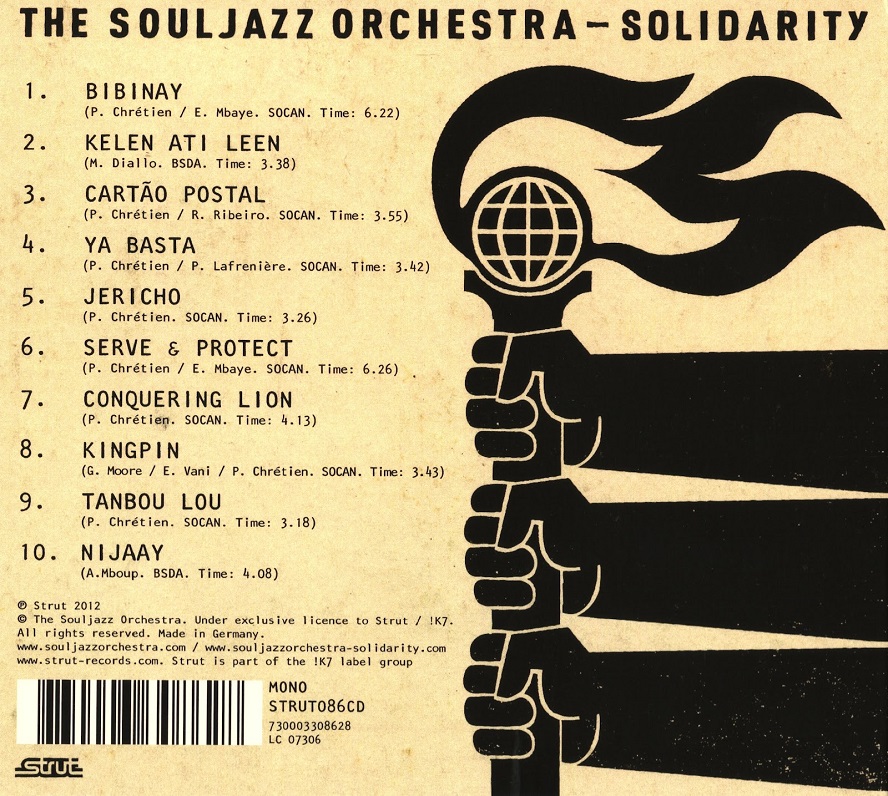
The Souljazz Orchestra - Solidarity - 2012


The Souljazz Orchestra is a Canadian multicultural group, created in Ottawa, that has spent more than a decade perfecting its characteristic sound: a percussion explosion of soul, jazz, Afro, Latin and Caribbean rhythms, backed by an arsenal of analog-style keyboards from the 60s and 70s of the 20th century.

Solidarity (2012) is his latest work (after his wonderful Rising Sun of 2010) made by the British label Strut Records. It features a unique range of artists connected to the group through Canada's vibrant underground scene, coming from a variety of backgrounds, from Senegal to Brazil and Jamaica, catalyzing artistic exchange and allowing the group to remain rooted in musical traditions throughout. while pushing the boundaries of soul, jazz, reggae, tropical and afrobeat styles (reinterpreting each genre as never heard before) unified by an underlying message of social change and interculturality.

Some exciting rhythms, unclassifiable, with the rare ability to skip all the clichés of musical fusion.


Staff:


Zakari Frantz (Alto Sax, Percussion, Vocals)

Ray Murray (Baritone Sax, Percussion, Vocals)

Steve Patterson (Tenor Sax, Percussion, Vocals)

Pierre Chrétien (Keyboards, Percussion, Vocals)

Philippe Lafrenière (Drums, Percussion, Vocals)

Marielle Rivard (Percussion, Vocals)


01. Bibinay (feat. El Hadji "Élage" M'Baye)

02. Kelen Ati Leen

03. Cartão Postal (feat. Rômmel Teixeira Ribeiro)

04. Ya Basta

05. Jericho

06. Serve & Protect (feat. El Hadji "Élage" M'Baye)

07. Conquering Lion

08. Kingpin

09. Tanbou Lou

10. Nijaay


septiembre 22, 2022

Sibusile Xaba - Open Letter to Adoniah


A key player in the new generation of South African jazz musicians, KwaZulu-Natal-born guitarist and vocalist Sibusile Xaba has all the makings of a master acoustic guitar player. With a vocal style that is part dreamcaping and part ancient invocation, Xaba divines rather than simply sings. Combined with a guitar style that is rooted in expressive choice, Xaba's music breaks the boundaries of the genre, taking only the fundamentals of mentors like Madala Kunene and Dr. Philip Tabane and imbuing them with an improvisational mythology and intensity of their own.


'Open Letter to Adoniah' is a reverent album of life and its connection to a higher source. The music emanates from the dreams revealed to Xaba on consecutive days and most of the album was recorded live in the Magaliesberg mountains outside of Johannesburg in the winter of 2016.


Featuring percussionists Thabang Tabane and Dennis Moanganei Magagula, the trio blends geographical and spiritual influences, hinting at Maskandi (a style of music dominant in Xaba's native KwaZulu-Natal) and the improvisational culture of South Africa's jazz avant-garde. Collectively, the musicians reshape these influences, situating them within rhythms that span the African continent. Thabang Tabane's influence on the project gives it a spiritual sensibility allusive to Malombo's music that his father, the legendary Dr. Philip Tabane, originated in the early 1960s.


1. Open Letter to Adoniah 05:00

2. Wampona 05:29

3. Emazulwini 05:18

4. Sibongile : Tribute to the Mother (Reprise) 04:46

5. Nomaphupho 04:52

6. Angisenalutho 03:52

7. Nyandi Yeni (Interlude) 01:14

8. Swaziland 03:34

9. Liyabukwa 03:57

10. Inkululeko (Reprise) 07:38


Fuente: https://sibusilexaba.bandcamp.com/album/open-letter-to-adoniah


septiembre 18, 2022

Orchestre National de Barbès - Rendez - vous Barbès - 2010


The Orchester National de Barbès is the noise, the smell and the soul of this mestizo neighborhood of Paris, but also the fusion of the different North African and French musical communities, the union of 11 musicians from different regions of the Maghreb and France who set up a repertoire that puts everyone in agreement, Moroccans, Algerians, Tunisians and French from the popular neighborhoods. Their penultimate album, Rendez-vous Barbès (2010), is a synthesis of the 3 previous ones and comes to breathe a new dynamic into North African music of which they are the best ambassadors.


With Algerian and Moroccan roots, the members of this orchestra lived in the Parisian neighborhood of Barbès when they got together to make music in 1995. Barbès is an emblem of the history of immigration in France, the place where many Algerian, Moroccan and , Malians or Senegalese chose their first address, usually a room in a dilapidated hotel, hoping to scrape together a little money. And it is in the cafes of this neighborhood that the North African music scene was born in France, then confidential and frequented only by the hundreds of immigrants who came down to the cafe on their way back from the factory, to listen to some songs from their country. Mythical singers came from there, like Dahmane El Harrachi or Cheb Khaled.


Today, more than fifteen years later, the Orquestre National de Barbès continues to mix traditional Maghrebi styles, raï, reggae and Gnawa music with contemporary sounds and rhythms to show the world the sound richness of Africa, including both the north and the lands. that start from the Sahara desert, emphasizing the most festive rhythms and taking tradition as a base to adapt it to the sounds of today.


Rendez-vous Barbès is a synthesis of his three previous works. Songs inspired by allaoui, raï, gnawa, chaabi, Berber, reggae rhythms... combined with an energy inspired by rock and ska. A snapshot of the energy and creative spirit that characterizes the popular neighborhoods of Paris, an album that invites you to dance and that would almost make you forget the "too serious" of the inhabitants of the French capital. In short, "an intense album, which results in an invitation to travel through that immense world that is found in the streets of that multicultural neighborhood that is Barbès".


Tracks list:

01. Sidi Yahia-bnet Paris

02. Chkoun?

03. No no no

04. Chorfa

05. RDV Barbès

06. Jarahtini-Marhba-Jibouhali

07. Rod Balek

08. Laafou

09. Denya

10. Allah idaouia


Página web oficial: Orchestre National de Barbès

septiembre 13, 2022

Michael Spiro & Mark Lamson - Bata Ketu


In the ebb and flow of life, things come together and things fall apart. This constant rhythm is observed in everyday life, as well as in historical summaries of past centuries. Bata Ketu is an Inter-musical game consisting of six acts. It tells the story of Yoruba music, uprooted from Mother Africa, transplanted in Cuba and Brazil, evolving separately in time, to later come together in the present day. In this meeting of two long separated "brothers", the differences and similarities to create a new form, dynamic art through performance and celebration.


During the long years of slavery in which the Yorubas and their descendants suffered in Cuba and Brazil, their ancestral deities, the Orishas, ​​would appear in the physical world through the possession of the initiates. Through a living art of song, drumming and dance, the orishas have lived as far as the shores of Africa. It could be said that whenever the rhythms of the orisha are played or their songs sung, they exist in our physical world.

Listening to this recording, you will hear the Afro-Cuban and Afro-Brazilian percussion instruments that accompany the call and response to the songs dedicated to the orishas. These spiritual songs invoke beauty and power that communicate directly to the inner being of each person. The songs come from both Cubans (lucumí) and Brazilians (candombe). In some cases, Cuban drums accompany Brazilian songs, while Brazilian drums and rhythms accompany Cuban songs. In other cases, two versions of the same song, one from each country, are sung back to back.


Although both versions are clearly the same song, the difference between the Brazilian and Cuban flavors delights the senses. On the other hand, there is a wonderful sense of balance in Bata Ketu, as Cuban songs are sung by a woman, and Brazilian songs are sung by a man. These arrangements not only demonstrate a deep understanding of both lineages, but also the variety and ingenuity of the groupings in creating new and original musical textures that can be appreciated by beginner and aficionado alike.


The extraordinary music heard at Bata Ketu is the work of two visionary American percussionists, Michael Spiro and Mark Lamson. They are accompanied by Brazilian Percussion Master Jorge Alabe, Cuban singer and musicologist Bobi Céspedes, and Regino Jiménez considered one of the greatest olú -batá (percussionist) from Cuba.

Fuente: http://www.bembe.com/bataketu/

agosto 31, 2022

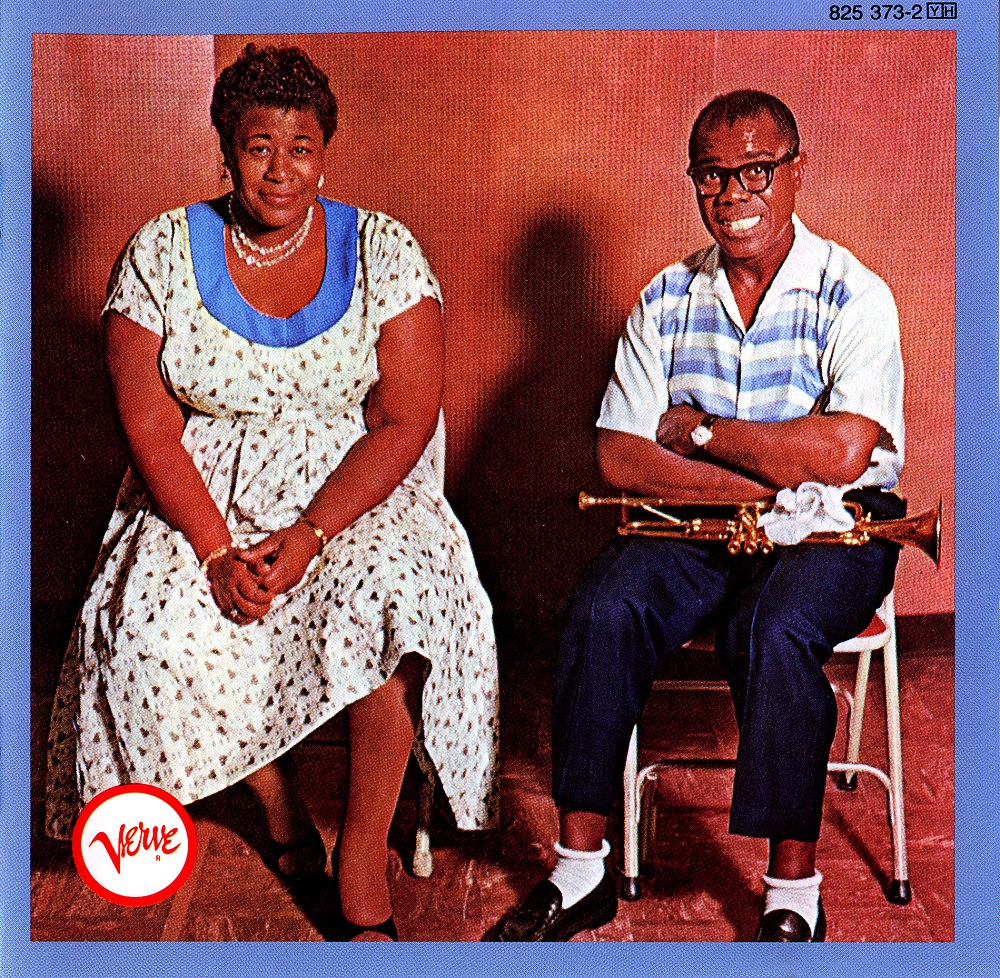
Ella Fitzgerald y Louis Armstrong - Ella & Louis - 1957


Ella & Louis, the magic, Ella Fitzgerald and Louis Armstrong, two angels who, apart from Porgy and Bess (Gershwin's opera), only recorded two more albums. The sweetest music ever recorded, it is not possible to listen to Ella & Louis without smiling. It's like an unavoidable partnership that makes you wonder what titanic forces of nature kept Ella and Satchmo apart until they made this record together in 1957, backed by the trio of Oscar Peterson and Buddy Rich on drums.

She and Louis have been the most amazing jazz couple ever. Each one in their plot gave lectures and defined styles, becoming absolute references. Duke Ellington, Cole Porter, Bing Crosby or Frank Sinatra, for example, refined their styles from Ella and Louis.

Ella Fitzgerald, a New Yorker who disappeared in 1996, is considered among the most important jazz singers in history. In addition, she shone in all the styles that she had to interpret (be-bop, blues, soul, swing...). And her résumé includes performances with Count Basie, Duke Ellington, Oscar Peterson, Dizzy Gillespie, Joe Pass, and (of course) Louis Armstrong.


For her part, Louis Armstrong, from New Orleans, who died in 1971, "Satchmo", was the most popular jazz musician, trumpeter and singer in US history. Protagonist of an incredible personal story, in his childhood he was abandoned, he grew up in a reform school, he played a “cornet” for pennies… And he demonstrated his political and civil rights commitment with actions, financially supporting Martin Luther King, confronting Eisenhower, and fighting for the rights of African American citizenship in the South. Louis Armstrong is one of the most charismatic and innovative figures in the history of jazz. Thanks to his musical skills and his brilliant personality, he transformed jazz from its initial status as dance music with folk roots into a popular art form. Although at the beginning of his career he cemented his fame above all as a trumpeter, later on it would be his condition as a vocalist that would consecrate him as an internationally recognized figure with enormous influence on jazz singing.

So Ella and Louis getting together is magical. One of the best with one of the best. The songs they perform together are standards, extraordinary standards, of course, like "Moonlight in Vermont," "A Foggy Day," and "Stars Fell on Alabama." But nirvana is "Cheek to Cheek", "The nearness of you" and "April in Paris". You touch the sky with your fingers.


Tracks list:

01. Can´t we be friends

02. Isn´t this a lovely day

03. Moonlight In Vermont

04. They can´t take that away from me

05. Under a blanket of blue

06. Tenderly

07. A foggy day

08. Stars fell on Alabama

09. Cheek to Cheek

10. The nearness of you

11. April in Paris