Radio Salone

Travel Through Music

Post Top Ad

Mostrando entradas con la etiqueta Allah. Mostrar todas las entradas
octubre 12, 2022

Ifriqiyya Electrique - Rûwâhîne
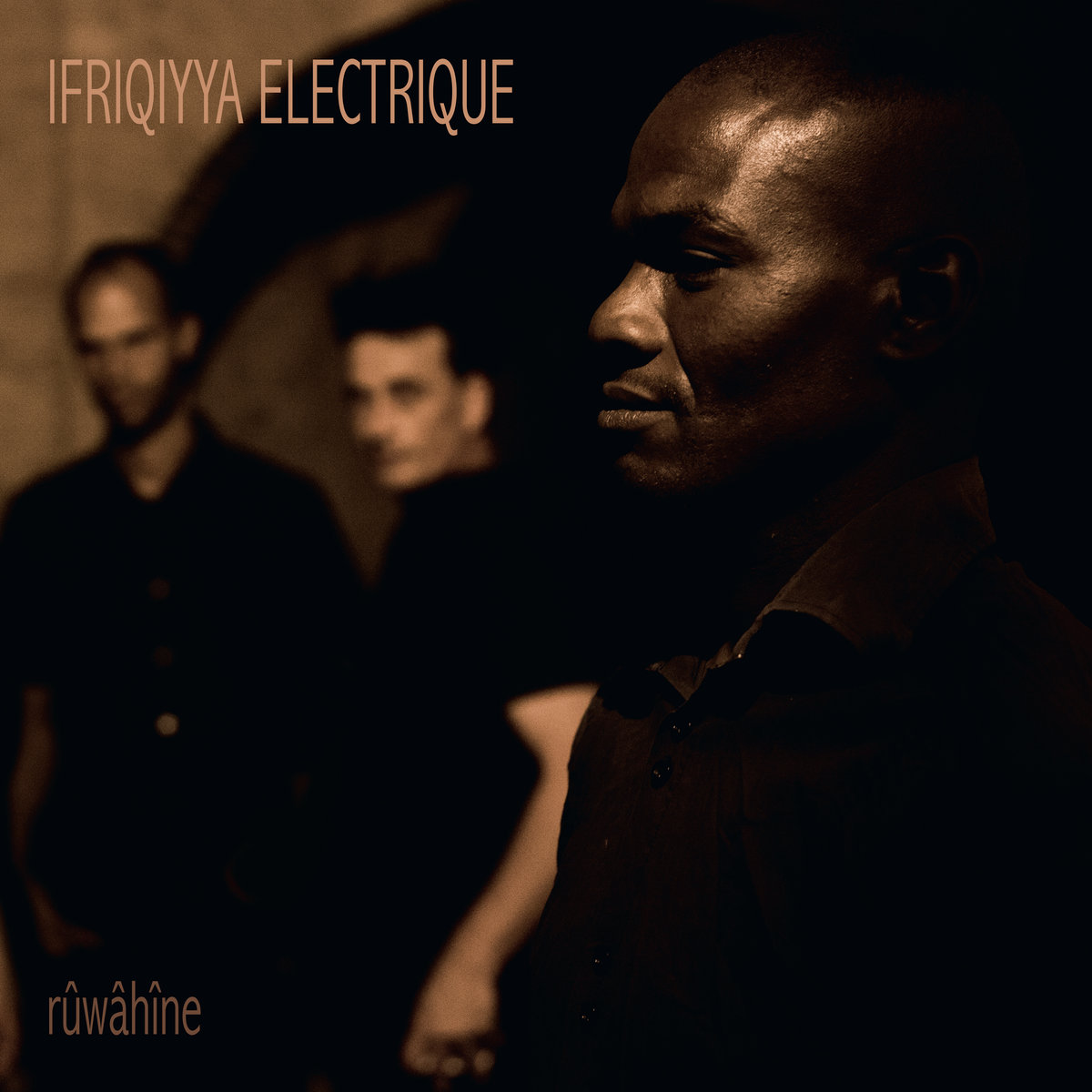


Sufi trance musicians and rituals – from the depths of the Tunisian desert – in conversation with post-industrial sonics. 


‘No theatre or stage or audience. The rûwâhîne have possessed and contorted the bodies of the Banga. Teenagers leap to the floor, their legs arched and tense, glaring transfixed [while] girls dance wildly, … accelerating the rhythm of the hand percussion’ 


‘This is, then, most certainly not a “world music” project (still less an ethnomusicological one), but a wild process of improvisation and re-composition that brings traditional instruments face to face with computers and electric guitars… [My work] is driven towards elevation, sweat, blood, poetry and tears – not to some pretty colour postcard’ — François R. Cambuzat / Ifriqiyya Electrique


1. Laa la illa Allah 02:49 

2. Qaadrii - Salaam Alaik - Massarh 07:32 

3. Mawwel 01:09 

4. Zuru el Haadi - El Maduulaa - Maaluuma 06:34 

5. Stombali - Baba ‘Alaia 03:39 

6. Annabi Mohammad - Laa la illa Allah - Deg el bendir 09:15 

7. Lavo - Baba Marzug - Sidi Saad - Allah 04:46 

8. Arrah arrah abbaina - Bahari - Tenouiba 05:42 

9. Sidriiya 02:05


julio 16, 2022

Youssou N´Dour - Egypt - 2004


Egypt has been the most ambitious and controversial project of Youssou N´Dour. If he had so far fused African rhythms with Western melodies, on this album he embarks on a journey through Senegal's Sufi tradition accompanied by the Egyptian and Arabic orchestral arrangements of the Fathly Salama orchestra. Egypt is a song to the tolerance of Senegalese Islam and to the musical encounter between black Africa and the Middle East.


Egypt's repertoire sounds thanks to the combination of Senegalese percussion and Egyptian instruments (magruna, doholla, sagat, kawala) and Arabs (rababa, oud). The string arrangements sublimate some songs, already beautiful in themselves. The result is superb. From the initial greeting of "Allah" to the farewell "Touba – Daru Salaam", the musical pilgrimage that Youssou N'Dour proposes between Dakar and Cairo demonstrates that the evolution of popular music, which has its roots in the villages, He does not understand globalization or invasions but rather dialogue and respect, emphasizing over and over again the importance of what he loves: a humanist Islam.

As the quote from Mamadou Dia, which closes the album's libretto, points out: "Love, in Islam, is not intellectual but visceral."

Egypt was a Grammy Award in 2005 for "Best Contemporary World Music Album".


Tracks list:

01. Allah

02. Shukran Bamba

03. Mahdiyu Laye

04. Tijaniyya

05. Baay Niasse

06. Bamba The Poet

07. Cheikh Ibra Fall

08. Touba - Daru Salaam


agosto 07, 2020

Nass Marrakech - Sabil 'a 'Salaam - 2000

With the intention of interpreting in a respectful but at the same time current tradition of the Gnawa people, in 1991 the Nass Marrakech group was born. Nass Marrakech investigates, since its foundation, the Gnawa heritage: a music based on the repetition of overlapping rhythmic forms and on typically African "call and response" chants. A music that is at the same time popular and sacred, which is directly connected with the other black-African musics (blues, gospel, yoruba songs, samba, etc.), as well as taking new paths, in directions such as jazz or the most avant-garde electronic music, without being tempted by the fusion with pop. Retrieving original texts on the Gnawa rhythm and color, the group creates its own themes on current issues such as racism, peace and ecology.

His first two works emerge from this work, Sabil 'a' Salaam (2000) and Bouderbala (2002), in which they mix the sounds of instruments from Central Africa (djembes, sabar) with the mandolin, Indian tabla, bendir, karkaba and the lute. Magical and fascinating.

Trackslist:
01. Ana, Anta
02. Yo-mala
03. Salaam Aleikum
04. Marhaba
05. Allah
06. Hamdushi
07. Shema
08. Hammeadi
09. Torkalila