Radio Salone

Travel Through Music

Post Top Ad

octubre 19, 2021

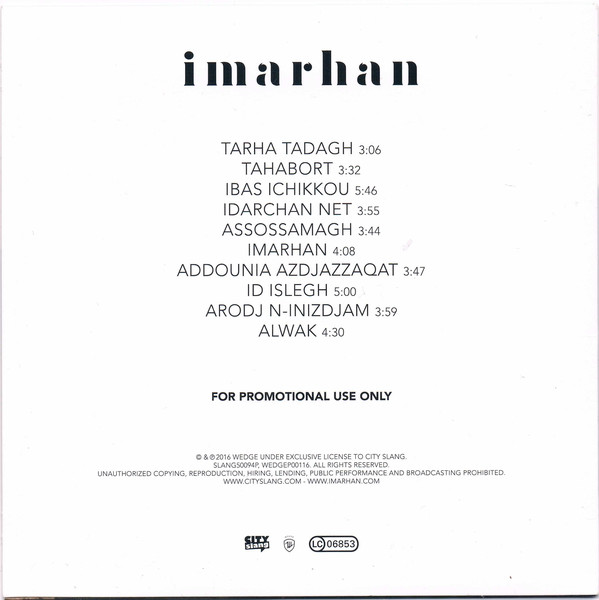
Imarhan - Imarhan - 2016 - Argelia
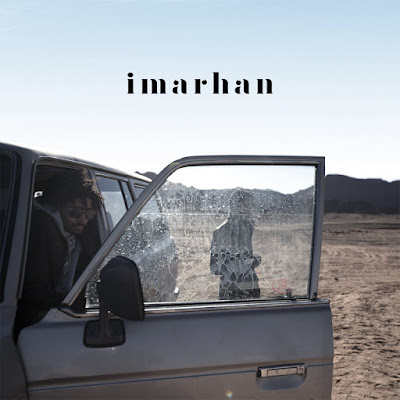


Newcomers to the independent scene, the first album of the Tuareg group IMARHAN is produced by Eyadou Ej Leche Tinariwen to whom they have as little protégés.


Between traditional Tuareg music, desert funk, blues and psychedelics from the sun, IMARHAN was one of the revelations of the last Rennes Transmusicales.


Kurt Vile invited them to play on the first part of his European tour, Howe Gelb and Steve Shelley from Sonic Youth are fans.


The evidence that the group breaks the boundaries. Dancing like 70s funk, like deep and dense Americans like Tinariwen, psychedelic like 13th Floor Elevators, IMARHAN will haunt you.


  IMARHAN is the group that will love indie world music, the group that will make the world love rock lovers. 


Tracklisting

1. Tarha Tadagh 

2. Tahabort 

3. Ibas Ichikkou 

4. Idarchan Net 

5. Assossamagh 

6. Imarhan 

7. Addounia Azdjazzaqat 

8. Id Islegh 

9. Arodj N-Inizdjam 

10. Alwak


octubre 17, 2021

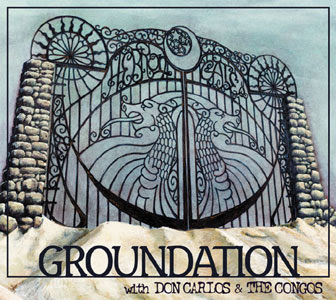
Groundation - Hebron Gate - 2002 - USA


Groundation is a Californian band that has a modern reggae sound. The band's mission is to integrate the modern sound of this century with the roots reggae sensibility that was played in the past. " Stephen Davis, Author It is said that if you don't know your past, you won't know the future; Well, Groundation knows the past and is walking into the future, They capture the essence of true roots reggae and fuse it with Jazz and dub to elevate the genre to a new platform. National critics and the world's press praise his records and place Groundation among the most respected reggae bands in the world. Groundation was formed in the Jazz program on the Sonoma University campus in 1998, by Marcus Urani. (Piano / Keyboards / Organ), Ryan Newman (Bass) & Harrison Stafford (Vocals / Guitar). In 2000, David Chachere, a jazz trumpeter from San Francisco and Kelsey Howard, a trombonist from North Bay, joined, in 2003 the percussionist Mingo Lewis Jr. (son of the legendary percussionist from Santana Mingo Lewis), the Jamaican choristers Kim. Pommell & Stephanie Wallace join in 2004; the latest addition was jazz / fusion drummer Te Kanawa Haereiti, in July 2008, replacing “Papa” Paul Spina (Les Claypool, Motherbug). The Groundation sound can be described as an organic fusion of Roots Reggae and Funk / Jazz fusion with dub. The seeds of this progressive sound have been planted all over the world and today they are bearing fruit, since his first tour of Europe in 2004, Groundation has played in more than 30 countries on 4 continents, such as Poland, Greece, Brazil. and Israel. They have headlined festivals such as the Nice Jazz Fest (France), Summerjam (Germany), Rototom Sunsplash (Italy), The Cactus Festival (Belgium) and The Papa Kiki Festival (New Caledonia). His last tour in Europe reached a new record, filling with 6000 people Le Zenith, in Paris.


Marcus Urani (Piano / Keyboards / Organ)

Ryan Newman (Bass)

Harrison Stafford (Vocals / Guitar).

David Chachere: Trumpet Kelsey Howard: Trombone Mingo Lewis Jr .: Percussion 


1 - Jah Jah Know

2 - Babylon Rule Dem

3 - Silver Tongue Show

4 - Weeping Pirates

5 - Picture On The Wall

6 - Something More

7 - Hebron

8 - Freedom Taking Over

9 - Undivided


octubre 10, 2021

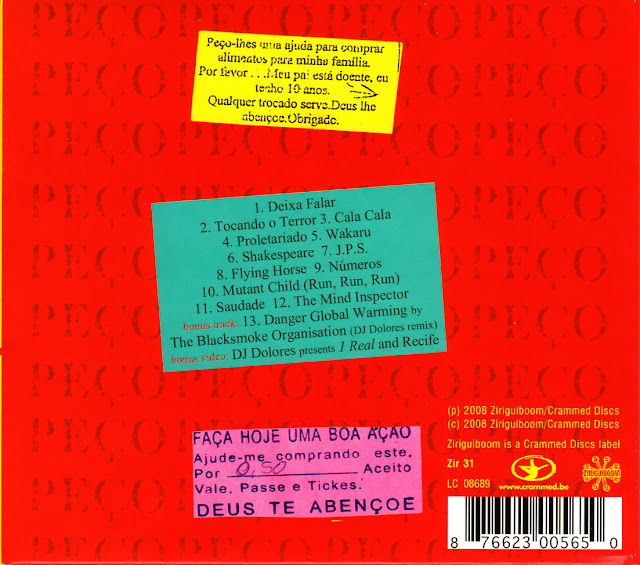
Dj Dolores - 1 Real - 2008


DJ Dolores shows that in Brazil there is an astonishingly rich world beyond samba and bossa nova. The use of elements of popular music from the northeast of Brazil, mixed with electronic music, rock and dub influences, forms the stamp of DJ Dolores, the artistic name of Helder Aragão. His career began in the city of Recife at the end of the eighties. Until then he had been a documentary producer and graphic designer, but in the last four years Dolores has taken a step forward producing his own music from Recife's enormous harmonic and rhythmic legacy.


His style was evident in his first remixes for artists such as Gilberto Gil or Fernanda Porto.


In 1 Real, his last work to date, he combines traditional rhythms such as forró (a mixture of local rhythms that incorporates the European accordion, harmonica and zabumba of African origin), electric guitars, rhythm machines and computer programming . He recovers the music of the Jovem Guarda (Brazilian rock from the 60s) and pieces by musicians from the eighties such as Cadão Volpato, leader of the cult band Fellini. In "Danger Global Warming" he has the collaboration of ex-Stranglers Hugh Cornwell, as well as The Blacksmoke Organization. 


trackslist:

01. Deixa Falar

02. Tocando o Terror

03. Cala Cala

04. Proletariado

05. Wakaru

06. Shakespeare

07. J.P.S.

08. Flying Horse

09. Números

10. Mutant Child (Run, Run, Run)

11. Saudade

12. The Mind Inspector

13. Danger Global Warming (The Blacksmoke Organisation)


octubre 08, 2021

Hermanas Benitez - Todos Sus Exitos En España en Discos Discophon - 1964 - 1967


01.Hermanas Benitez - America (2:28) 

02.Hermanas Benitez - Nada, Nada (2:25) 

03.Hermanas Benitez - Sole, Pizza E Amore (2:52) 

04.Hermanas Benitez - Nadie (2:26) 

05.Hermanas Benitez - Un Beso Pequenisimo (2:38) 

06.Hermanas Benitez - Torero (2:42) 

07.Hermanas Benitez - Ju-Bi-Ju (1:56) 

08.Hermanas Benitez - Fuera Pena (2:51) 

09.Hermanas Benitez - El Patito (2:18) 

10.Hermanas Benitez - El Vendedor De Melones (2:56) 

11.Hermanas Benitez - Baila Ye-Ye (2:05) 

12.Hermanas Benitez - Su Forma De Besar (2:06) 

13.Hermanas Benitez - La Mascara (2:34) 

14.Hermanas Benitez - Quiero Un Marido (2:06) 

15.Hermanas Benitez - Buenos Dias, Acapulco (2:28) 

16.Hermanas Benitez - T? Ser?s Mi Baby (2:09) 

17.Hermanas Benitez - Chao, Chao (3:17) 

18.Hermanas Benitez - Muneca De Cera (2:25) 

19.Hermanas Benitez - Al Compas De La Yenka (1:56) 

20.Hermanas Benitez - Cu-Cu-Rru-Cu-Cu Paaloma (3:21) 

21.Hnas. Benitez - America (2:14) 

22.Hnas. Benitez - Nada,Nada (2:12) 

23.Hnas. Benitez - Sole ,Piza E Amore (2:15) 

24.Hnas. Benitez - Nadie (2:29) 

25.Hnas. Benitez - Un Beso Pequenisimo (2:25) 

26.Hnas. Benitez - Torero (3:09) 

27.Hnas. Benitez - Ju-Bi-Ju (2:06) 

28.Hnas. Benitez - Fuera Pena (2:41) 

29.Hnas. Benitez - El Patito (1:56) 

30.Hnas. Benitez - El Vendedor De Melones (3:06) 

31.Hnas. Benitez - Baila Yeye (1:55) 

32.Hnas. Benitez - Su Forma De Besar (2:31) 

33.Hnas. Benitez - La Mascara (3:42) 

34.Hnas. Benitez - Quiero Un Marido (3:01) 

35.Hnas. Benitez - Pata Pata (3:00) 

36.Hnas. Benitez - Tu Seras Mi Baby (2:39) 

37.Hnas. Benitez - Chao Chao (1:57) 


Fuente: https://melomanchik.blogspot.com/2021/07/hermanas-benitez-todos-sus-exitos-en.html

octubre 07, 2021

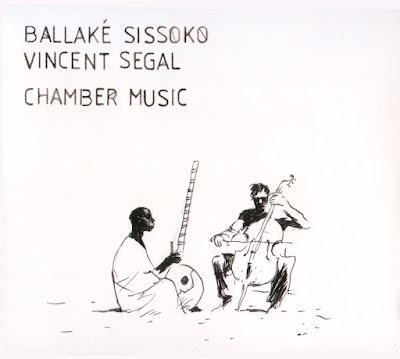
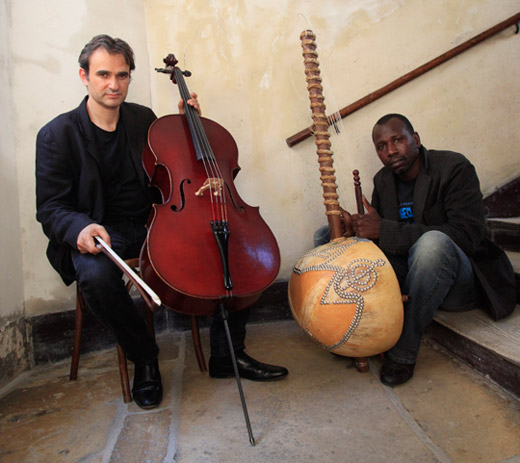
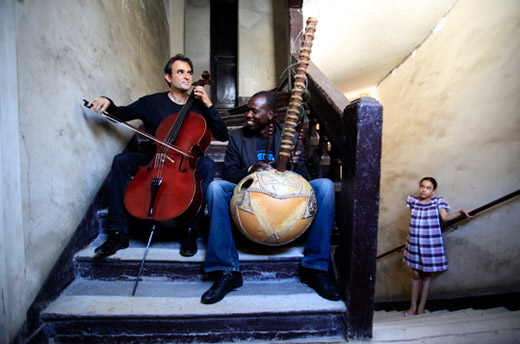
Ballaké Sissoko & Vincent Ségal - Chamber Music - 2009


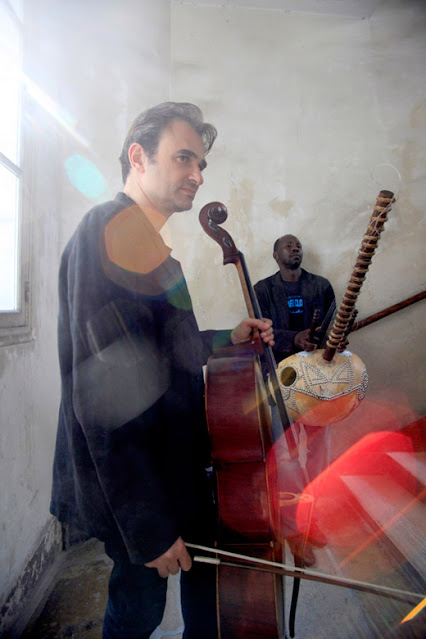
The kora of the Malian Ballaké Sissoko and the cello of the Frenchman Vincent Ségal dialogue serenely and delightfully in Chamber Music, with songs by the guitarist and singer John Pizzarelli, the Cape Verdean singer and songwriter Mayra Andrade, the Brazilian Beatriz Azevedo, and the guitar duo and clarinet formed by the Brazilians Guinga and Paulo Sérgio Santos.

Recorded in three night sessions, at Salif Keita's studio in Bamako, in May 2009, the result is a little gem, the fruit of the complicity of two virtuosos. On the one hand, Ballaké Sissoko, experimenter of a fascinating instrument that transmits the culture of the West African peoples, who has already recorded with his teacher Toumani Diabaté New Ancient Strings (an album destined to become a kora classic), with the pianist Italian Ludovico Einaudi Diario Mali (2003), and with Rajery and Driss el Maloumi the fabulous 3rd (2008). On the other, VincentSégal, an excellent classically trained cellist, backed by a long curriculum as a collaborator and studio musician of multiple recordings (Sting, Cesaria Evora, Carlinhos Brown, Mayra Andrade…).

Thus, in Chamber Music it is shown that the union of north-south cultures is possible in an exercise of care, where the instruments appear clean and without additives, except that some other subtle percussion and splendid collaborations (the voice of Awa Sangho , Mahamadou Kamissoko's ngoni, Fassery Diabate's balafon, and Demba Camara's bolon and karignan). Africa in the form of absolutely captivating chamber music. 


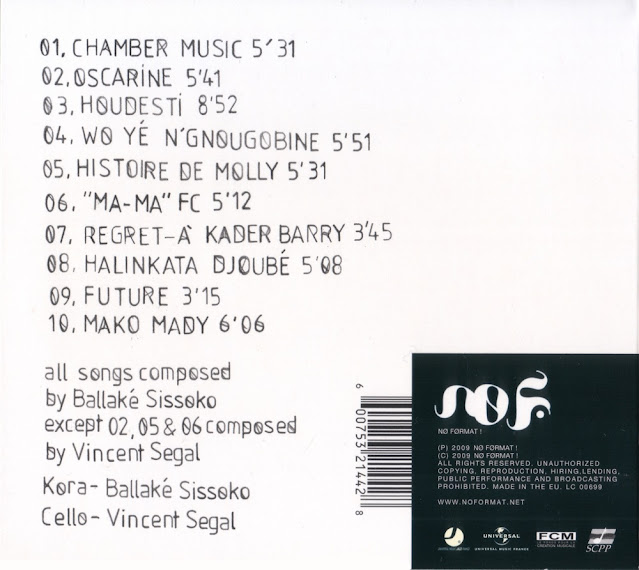
Trackslist:

01. Chamber Music

02. Oscarine

03. Houdesti

04. WoYéN´gnougobine

05. Historie de Molly

06. "Ma-Ma" FC

07. Regret - à Kader Barry

08. HalinkataDjoubé

09. Future

10. MakoMady


septiembre 24, 2021

Trio Da Kali and Kronos Quartet - Ladilikan


You take a trio of the finest traditional griot musicians from Mali and put them in the studio with a revolutionary Western string quartet - and the outcome is one of the most unusual and rewarding musical collaborations you are ever likely to encounter. 


Ladilikan, the new album by Trio da Kali and Kronos Quartet represents a landmark in cultural cross-fertilisation which both parties rank among the most satisfying musical experiences in their diverse careers. David Harrington, who founded the Kronos Quartet in 1973, enthuses that the album is “one of the most beautiful Kronos has done in forty years.” On first hearing their griot grooves being played by two violins, viola and cello, Trio da Kali’s Lassana Diabate announced, “This is going to be the best collaboration of my life.” Da Kali means ‘to give a pledge’ – in this case to a musical heritage that dates back to the time of Sunjata Keita, founder of the great Mali empire in the early 13th century. The line-up of balafon (xylophone) bass ngoni (lute) and female singer is also based on ancient tradition, although the trio format and its repertoire is now an endangered species in contemporary Malian music. 


All three Da Kali members come from hereditary musical families, and were brought together as a griot super group by Dr Lucy Duran. Balafon player and musical director Lassana Diabaté was a long-time member of Toumani Diabate’s Symmetric Orchestra and has recorded with Salif Keita, Taj Mahal and many others. A musician of great subtlety and invention he has honed a virtuoso two-balafon technique to perfection. Bass ngoni player Mamadou Kouyaté is the eldest son of the instrument’s greatest exponent, Bassekou Kouyaté and he holds down the groove in his father’s band ‘Ngoni ba’. He is also involved in the thriving Bamako hip-hop scene. Singer Hawa ‘Kassé Mady’ Diabate is the daughter of Mali’s greatest traditional singer, Kassé Mady Diabate, and the power, range and phrasing of her voice led David Harrington to compare her to the late queen of American gospel, Mahalia Jackson. 


The Kronos Quartet – David Harrington and John Sherba on violins, Hank Dutt on viola, and cellist Sunny Yang - have built an enviable reputation as the world’s most adventurous string quartet. Known for their commitment to continually re-imagining the string quartet experience Kronos have released over 50 records of extraordinary breadth and creativity and they are no strangers to collaborations with some of the world’s foremost composers and artists. Combining the spirit of fearless exploration with expert craftsmanship and skill, Trio Da Kali’s original repertoire has been taken on a fascinating journey, giving a new voice to timeless sounds. 


Tita

Kanimba

Eh Ya Ye

Garaba Mama

God Shall Wipe All Tears Away

Samuel

Lila Bambo

Kene Bo

Ladilikan

Sunjata


septiembre 23, 2021

Seckou Keita - 22 Strings - 2015


After his sublime album Clychau Dibon, with Welsh harpist Catrin Finch (who won the "Cross-Cultural Collaboration" award at the 2014 Songlines Music Awards), Seckou Keita presents his new solo album: 22 Strings (2015), the of his ancestral instrument, the kora, meditation grace and consummate elegance.

The title 22 Strings refers to a story about the kora, which has 21 strings. According to an old legend, when the spirits (djinns) of the African jungle gave the first kora to the griot Jali Mady "Wuleng", it had 22 strings. When Jali Mady died, his fellow griots took a rope in memory of him. In its birthplace in southern Senegal and Guinea Bissau, the 22-string kora has survived, giving special advantages in terms of tonal range. For Seckou Keita, this additional rope represents home, the place where his heart resides.


Seckou shows us the kora in its purity, a wonderful instrument that can take the human spirit to a place of deep meditation, stillness and beauty. As a sample button, the album's closing theme ("Future Strings in E", also featured on Clychau Dibon), an impressive showcase of Seckou's inventiveness on these twenty-two strings. 


01. The Path From Gabou

02. N' Doké (Little Bro)

03. Mikhi Nathan Mu-Toma (The Invisible Man)

04. If Only I Knew

05. Alpha Yaya

06. Kana-Sila

07. Tatono

08. Mandé

09. Abdou N' Diaye

10. Future Strings in E


septiembre 03, 2021

Frode Haltli - Avant Folk


The opening track of ‘Avant Folk’ is like a dream of what contemporary experimental folk-meets-jazz-meets-chamber-music might be. Composed by Frode Haltli, ‘Hug’ begins with a galumphing off-centre rhythm that could be an accompaniment to elephants waltzing before the wheezing bellows-breath of Haltli’s accordion creates delightfully airy whispers of noise that drift across the other instruments like wisps of cloud across the sky.


Then we get the entry of the theme, a compulsive Nordic ear-worm folk melody led by Hardanger fiddle and violin that’s half woozy sea-shanty and half universal pan-African groove, backed up by shuffle-beat drumming like Ed Blackwell with Ornette Coleman. As if that wasn’t enough for one tune already, the music continues to evolve, with a beautifully poised improvised solo on trumpet by Hildegunn Øiseth that sounds so perfect it should really win some kind of award on its own. The groove slows down, the elephant waltz returns to form a satisfyingly symmetrical conclusion and the music gradually resolves into silence, bringing to an end what has been seven and a half minutes of continuous invention. It’s quite a performance, and quite a band, the dectet of expert players covering enough instruments between them to simulate the tonal breadth of a full orchestra while retaining the humble, home-made aesthetic of a traditional folk ensemble, matching compositional sophistication and individual virtuosity with collective empathy and hard-won grace.


Elsewhere, as the album develops, the folk references expand to include echoes of west African desert blues, east European gypsy swing, Armenian double-reed laments and lugubrious Nordic village knees-ups on a range of material partly adapted from traditional hymn-tunes and songs from Norway and the Faroe islands to form a kind of north Atlantic gumbo. But ‘Avant Folk’ never feels like a slapdash fusion of different elements mashed together without regard for the integrity of the whole. Importantly, the band always sounds like a proper band, as fleet-footed as any improvisational jazz ensemble, and able to hurdle with ease the normal generic divides separating one type of music from another. By the time the listener reaches the end of the album’s final track, ’Neid’ – another Frode Haltli composition, like the opening ‘Hug’ – ‘Avant Folk’ has effectively created its own genre, a pleasingly congruent collection of stylistic traits that sounds like nothing so much as itself. All the music, whether composed by Frode Haltli or adapted from antique sources, is arranged jointly by Haltli and the band members.


So where did ‘Avant Folk’ come from and why does it sound so good? For a start, Frode Haltli (born 1975, Norway) is, like many of the ensemble’s star players, a classically-trained virtuoso who from an early age (he began the accordion at seven) has been well used to working between different forms of music, from traditional folk to the avant-garde, and to collaborating with players from all sorts of backgrounds. Haltli also composes, both on his own and with Maja S.K.Ratkje (his co-producer on ‘Avant Folk’, who is responsible for the album’s editing and mixing), and has developed very strong links with fellow musicians and composers both within Norway and internationally, once again working across the normal boundaries demarcating one musical form from another, recording the complete accordion works of Arne Nordheim, for example, but also appearing with the various groups of jazz saxophonist Trygve Seim. His debut recording for ECM, ‘Looking On Darkness’ was released in 2002, followed by ‘Passing Images’ from 2007, (with trumpeter Arve Henriksen, violist Garth Knox and Maja S.K. Ratkje on vocals), and ‘Air’ (2016), a recording of music for accordion and strings by Hans Abrahamsen and Bent Sorensen with the Arditti Quartet and the Trondheim Soloists. His debut release for Hubro, ‘Vagabonde Blu’ (2014), is a live solo recording featuring works by Salvatore Sciarrino, Aldo Clementi and Arne Nordheim. As if any further exemplars of Frode Haltli’s customary melding of the classical repertoire with folk, jazz and beyond were needed, we can also note his current duo with the Norwegian violinist Gjermund Larsen; The Snowflake Trio (with Irish flautist Nulala Kennedy and Norwegian fiddler Vegar Vardal); and a trio with another fiddler, Ragnhild Furebotten, and the Swedish nyckelharpist Emilia Amper.


The breadth of Frode Haltli’s interests is not unusual in Norwegian music and this is paralleled by a number of his collaborators on ‘Avant Folk’, many of whom – like the inspirational fiddler Erlend Apneseth (a regular Hubro artist in a number of settings) or the keyboardist Stale Storlokken (of Supersilent and Motorpsycho, among others) enjoy similarly wide-ranging careers that weave in and out of numerous musical styles and settings. But the last word on ‘Avant Folk’ has to be the music. The album ends on the suitably epic note of Haltli’s ‘Neid


1 Hug 07:22

2 Trio 04:22

3 Kingo 10:44

4 Gråtar'n 05:30

5 Neid 13:29


agosto 29, 2021

Ba Cissoko - Nimissa - 2012


Since Ba Cissoko's group became known on the World Music festival network in the early 2000s, their sound has been mixing traditional Guinean rhythms with reggae, rock and blues. The peculiar way of using the wah-wah pedal with the electrified kora gave them the nickname "African Jimmy Hendrix", supported by a spectacular and fun stage game.


In Nimissa the group, already in quintet format completed by guitarist Abdoulaye Kouyaté and drummer Alhassane Camara "D’artagnan", opens up to the brass of the AvaSaty Marching Band fanfare and to the percussions of Laurent Rigaud "Samba".

Produced by Philippe Eidel (Khaled, Gypsy Kings), the result is an album with an impressive range of sounds, from the funky Afrogroove of the song "Ako" that opens the album, to the reggae of the committed "Politiki", the jazzy groove of " Djoulo Diata "or the psychedelic of the electric kora of" Kora Rocks ". A work rooted in the original Mandingo culture and with an open gaze on all kinds of horizons of one of the most prominent African groups of the moment. 


Tracks list:

01. Ako

02. Politiki

03. Loumo

04. Naboran

05. N´Tenlebidjé

06. Djoulo Diata

07. Kéléfaba

08. N´Gnoni Ba

09. Djéli Fatouma

10. Kora Rocks


agosto 24, 2021

Zvuloon Dub System - Anbessa Dub


ZvuloonDubSystem is Israel's leading reggae band. Taking its name from one of the twelve tribes of Israel, the band was formed in 2006 by the Smilan brothers. They shared the same passion for reggae and roots dub, influenced by varied musical styles, such as Ethiopian jazz from the 70s, soul, funk and jazz from the United States, along with Israeli Mizrahi music.


Group:


Gili Yalo - lead vocals

Inon Peretz - trumpet

IlanAdiri - tenor sax

Ilan Smilan - lead guitar

Simon Nahum - rhythm guitar

Lior Romano - piano and organ

Mal Marcus - bass

Asaf Smilan - drums and percussion


Guest artists :


Mahmoud Ahmed - voice (5)

Zemene Melesse - voice (8)

Yaacov Lilay - voices (7)

Krar (1,7,10)

Leave Manchelot - masinko (10)

Roei Hermon - trumpet (6, 9)

Yonatan Voltzok - trombone (1-5, 7)

Maayan Milo - trombone (6,8,9)

Omri Abramov - Alto Sax (1-3, 5-7,9)

Elad Gellert - baritone sax (1)

Shay SattamanJacovi - backing vocals (8) 


1.Alemitu 03:52

2.Tenesh Kelbe Lay 03:47

3.Sab Sam 03:55

4.Man Begelagelgni 03:30

5.Ney Denun Tieshe - feat. Mahmoud Ahmed 04:25

6.Yehoden Aweteche Lengeresh 03:52

7.Tsbukti Fetret – feat. Yaacov Lilay 04:06

8.Endemenesh - feat. Zemene Melesse 03:58

9.Zelel Zelel 04:09

10.Yene Almaz 03:39 


agosto 14, 2021

Third World - Journey To Addis - 1978 - Jamaica


In my opinion, one of the best bands when it comes to interpreting reggae fused with soul music. This is a great album, the creation of different climates is an achievement that should not go unnoticed. Excellent bass lines and vocal compositions on tracks like Rejoice, Cool Meditation, and Fret Not Theyself to name a few. Going a little deeper in the coming years to the album we have the cover we found, Now That We Found Love by O'Jays, making it to the Top Ten of the American R&B in 1979 as well as the Britisth pop Top Ten in that same anus. The simple 'Cool Meditation' made it to the British Top 20. 


Tracks


One Cold Vibe (Couldn't Stop Dis Ya Boogie)

Cold Sweat

Cool Meditation

African Woman

Now That We Found Love

Journey To Addis

Fret Not Thyself

Rejoice 


agosto 11, 2021

Samite - Stars To Share


Landing on the Windham Hill label, Samite (having dropped the "Of Uganda" from his name several years back) offers a collection of songs inspired by his return to the African continent after approximately a decade of residence in the U.S. as a political refugee. The music is largely in keeping with his introspective folk style, but this time, several prominent Windham Hill artists make appearances, including Will Ackerman, Michael Manring, and Tuck & Patti's Patti Cathcart. The results are an intriguing fusion of African pop and new age whose sound actually leans more toward the latter.


Samite Mulondo is at once a refugee and a pilgrim, a wanderer with as many homes as his music leads him to enter. He sings in a bright, sweet tenor; accompanied by his extended family of thumb pianos and percussion instruments that have come to him at different points during his travels. His demeanor is austere and remote when he is confronted with strangers one-on-one and he is unclear about their motives. Yet, he is relaxed, open, and lovable when facing huge crowds from the stage, safe within his art and protected by his beloved instruments. Up close, the latter impression turns out to be by far the more accurate one, as he tells his difficult and inspiring tale with grace, warmth and wit.


1 Tindiba 4:19

2 Esawayo 5:52

3 Bring Back The Music 3:52

4 Old Man's Wisdom 4:00

5 Sala Endongo 3:47

6 Stars To Share 6:12

7 Cradle With Love 3:42

8 Having A Good Time 6:05

9 Siwa 4:53

10 I'll Be Strong 3:27

11 Mountains Of The Moon 3:40

12 Night Stories 5:41