Radio Salone

Travel Through Music

Post Top Ad

Mostrando entradas con la etiqueta sunset. Mostrar todas las entradas
noviembre 19, 2021

Gurrumul - Djarimirri - Child of the Rainbow
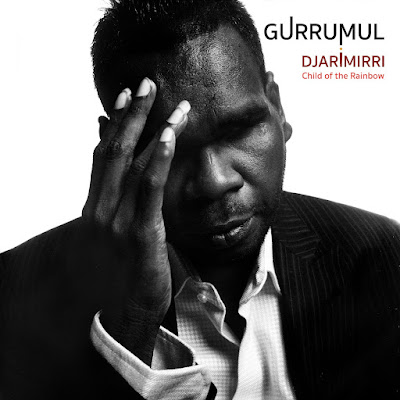


Geoffrey Gurrumul Yunupingu (Galiwin'ku, Elcho Island, Australia, January 22, 1971-Tiwi, Darwin, Northern Territory; July 25, 2017) was an Australian aboriginal musician, who sang in the Yolngu language.


He was born on Galiwin'ku (Elcho Island), off the coast of Arnhem Land, in northern Australia, about 580 kilometers from Darwin. He belonged to the Gumatj clan of the Yolngu and his mother was from the Galpu nation.He was born blind, never learned braille and did not have a guide dog or use a white cane. Yunupingu spoke a few words of English, and he was said to be extremely shy.


He played drums, keyboards, guitar, and didgeridoo, but it was the clarity of his singing voice that had attracted rave reviews. He sang stories of his land in both languages (Galpu, Gumatj or Djambarrpuynu, all Yolŋu Matha) and English. Before Yothu Yindi, he is now with the Saltwater Band. 


1 Waak (Crow) 5:08

2 Galiku (Flag) 5:01

3 Ngarrpiya (Octopus) 6:09

4 Djarimirri (Child of the Rainbow) 5:08

5 Djolin (Musical Instrument) 5:56

6 Marrayarr (Flag) 7:42

7 Gapu (Freshwater) 5:21

8 Djilawurr (Scrubfowl) 5:04

9 Baru (Saltwater Crocodile) 5:50

10 Gopuru (Tuna Swimming) 6:34

11 Djapana (Sunset) 5:08

12 Wulminda (Dark Clouds) 7:56


julio 25, 2021

Idris Ackamoor and the Pyramids - An Angel Fell


Strut presents the brand new album from cosmic jazz travellers The

Pyramids, led by saxophonist Idris Ackamoor, ’An Angel Fell’. “I wanted to use folklore, fantasy and drama as a warning bell,” explains Ackamoor.


“The songs explore global themes that are important to me and to us all: the rise of catastrophic climate change and our lack of concern for our planet, loss of innocence and separation... but positive themes too, the healing power of music, collective action and the simple beauty of nature.”


Produced by Malcolm Catto of The Heliocentrics, the album was recorded during an intense week at Quatermass studios in London and is one of the deepest, richest works yet from a band reaching their highest creative peak since the early ’70s. Some of the many highlights include the poignant title track depicting a fallen angel in purgatory, outrage and grief on the powerful, hard hitting ‘Soliloquy For Michael Brown’ and the lilting, beautiful album closer, ‘Sunset’.


The Pyramids originally came together in 1972 at Antioch College, Yellow Springs, Ohio where teachers included renowned pianist, Cecil Taylor.


After forming in Paris and embarking on a “cultural odyssey” across Africa, the group recorded three independent albums, ‘Lalibela’ (1973), ‘King Of Kings’ (1974) and ‘Birth / Speed / Merging’ (1976) and became renowned for their striking live shows, mixing percussive, spiritual and space-age jazz with performance theatre and dance. After migrating to San Francisco, they disbanded in 1977. 35 years later, the band reunited in 2012 following growing demand for their music from vinyl collectors.


German label Disko B released the freeform album ‘Otherwordly’ and in 2016, they released their first album for Strut, the acclaimed ‘We Be All Africans’.


Musicians:

Idris Ackamoor: Tenor Saxophone, Keytar, Lead Vocals

Sandra Poindexter: Violins, Lead Vocals


David Molina: Guitar, Effect pedals, Vocals


Skyler Stover: Double Bass, Vocals


Bradie Speller: Congas, Handsonic, Vocals


Johann Polzer: Drums

Album cover - top right

Artwork by Lewis Heriz.


1. Tinoge 06:59

2. An Angel Fell 08:37

3. Land Of Ra 09:25

4. Papyrus 07:41

5. Soliloquy For Michael Brown 09:21

6. Message To My People 07:48

7. Warrior Dance 11:10

8. Sunset 06:32

mayo 10, 2021

Hamza El Din - A Wish - Nubia


Hamza El Din (July 10, 1929 - May 22, 2006) was a Nubian composer, player of Oud, Arabic and Tar lute, Nile tambourine, and vocalist.

He was born in the village of Toshka, near Wadi Halfa in southern Egypt, and was originally trained to be an electrical engineer. After working in Cairo for the Egyptian national railway, El Din changed direction and began studying music at the University of Cairo, continuing his studies at the National Academy of Saint Cecilia in Rome; he also studied at the Ibrahim Shafiq Institute of Music and the King Fouad Institute for Middle Eastern Music, and traveled in Egypt on a government collection of popular songs. His performances attracted the attention of the Grateful Dead, Joan Baez, and Bob Dylan in the 1960s, which led to a recording contract and his eventual emigration to the United States. Like much in his Egyptian Nubia, his hometown of Toshka was flooded due to the construction of the Aswan Dam in the 1960s.

After his appearance at the Newport Folk Festival in 1964, he recorded two albums for Vanguard Records released between 1964–65; His 1971 recording Escalay: The Water Wheel is recognized as one of the first world music recordings to gain wide recognition in the West, and was recognized as an influence by some American minimalist composers such as as Steve Reich and Terry Riley as well as Grateful Dead percussionist Mickey Hart. He also performed with the Grateful Dead, most notably during their 1978 Egypt concerts. During this period, he also mentored some musicians, including Sandy Bull. Later, he released albums for Lotus Records and Sounds True. His album Eclipse was produced by Mickey Hart. He had a performance with the Kronos Quartet in an arrangement by Escalay in 1992. His pieces were occasionally used in ballet performances and plays.


El Din held some ethnomusicology teaching positions in the United States during the 1970s, 1980s, and 1990s at the University of Ohio, University of Washington, and the University of Texas at Austin, eventually settling in Oakland, California, after studying biwa in Tokyo, Japan, during the 1980s. In 1999 he released his last album, "A Wish".

Brilliantly playing the Oud (the forerunner of the lute, pipa and biwa) and the Tar (the ancient drum of the Upper Nile), along with haunting voice and fascinating compositions, Hamza El Din combines the pleasures and subtleties of the Arabic language with his indigenous music from his native Nubia.

In his masterful hands, the oud became a virtuous instrument and an accompaniment to his soft and hypnotic singing. He just created new music, essentially an Arab-Nubian fusion, but in line with the traditions. His music has captured the interest of millions of listeners in Europe, Japan, and North America.

Hamza El Din is a legend of music around the world, A Wish is the last of the 14 albums published during his life, again he has produced seven masterpieces Dedicated to Toshka, the town of his birth flooded more than three decades ago For the Aswan Dam project, the wish is Hamza's prayer remembering his home.

Along with cellist Joan Jeanrenaud (formerly Kronos Quartet), composer and pianist WA Mathieu, Jordanian percussionist Hani Naser, and Japanese Shizuru Ohtaka, among others, Hamza's mastery of the oud is as undeniable as ever. In his longing for home, he has kept the voice of his people alive and calm with the virtuosity of his performance, and has created a fine addition to humanity's musical heritage. 

1. Greetings (7:38) - comp. Hamza El Din, lyrics Ismail Hasan

2. Sunset (10:29) - Variations on a Theme of Riad El Sumbati by Hamza El Din

3. Anesigu (4:04) - comp. Hamza El Din, lyrics Mohammed N. Toshka

4. Griffin 2 (11:10) - comp. Hamza El Din, lyrics Ilia Abu Madi

5. Nagrishad (7:04) - comp. Hamza El Din

6. Samai Husaini (6:41) - comp. Kemani Tatyos Efendi, realized by Hamza El Din

7. A Wish (9:03) - comp. Hamza El Din, lyrics Mohi El Din Sherif